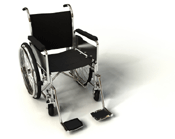
A study by MassMutual Life Insurance Company suggests your chosen profession can influence how you react to the possibility of a disabling illness or injury.
MassMutual commissioned a web survey of more than 1,000 U.S. career professionals to learn how they would respond to a prolonged loss of income. The insurer wanted to compare reactions across occupations such as attorneys, accountants, engineers, marketing and advertising, and other professional services.
The MassMutual Benefits Barometer Survey: Disability Perceptions had three objectives: to rate emotional responses to long-term disability across professions, to identify common reasons people do not carry Disability Income insurance, and to find what financial resources different occupational groups could tap if they were unable to work.
Advertising and marketing professionals were the most anxious about becoming disabled. Sixty-six percent said they would feel financially insecure, 26% said they would be unprepared emotionally, and 41% said they would worry about being able to work again.
Attorneys and executives in professional services tended to be less emotional about disability. Most attorneys surveyed expected to recover and return to work, though 70% reported anxiety about their financial future and 44% said they would feel like a burden to family members. Executives in professional services fell between the extremes on these measures.
Engineers and accountants were the most dispassionate group. Only 35% of engineers said they would feel a lack of financial security, and 27% of accountants said they would worry about returning to work.
When asked why they did not own Disability Income insurance, respondents most often said they did not feel they needed it (44%), that it cost too much (30%), or that they were in good health (27%).
About 21% of attorneys reported they could live on half their salary "as long as they had to" and were the most likely to have investments, home equity, or loans from family and friends to fall back on.
Advertising and marketing professionals were the least likely of the groups to describe themselves as financially stable or to rely on investments or home equity for support while recovering from a disability.
To compare general policy options, see Personal Disability Insurance.
If you need coverage focused on individual circumstances, see Individual Disability Insurance.
For examples of specialty plans, see Elevator Distributors Disability Insurance.
If you want personalized help comparing options, talk to an agent.
Frequently Asked Questions
Who is most likely to worry about becoming disabled?
Survey results show advertising and marketing professionals report higher levels of financial insecurity and emotional unpreparedness than some other professions.
Why do many professionals skip disability coverage?
Common reasons include a belief they do not need it, perceived high cost, and current good health.
What financial resources do people rely on if they become disabled?
Responses included savings, investments, home equity loans, and borrowing from family or friends, with availability varying by occupation.
How can I decide if disability insurance is right for me?
Consider your income sources, savings, job risk, and family obligations; discussing options with an insurance professional can help clarify needs.