Overview
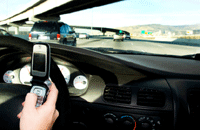
Automobiles today are used for far more than simple point-to-point travel; people eat, watch media, use phones and tinker with vehicle settings while behind the wheel. That convenience increases the chance of distraction and raises crash risk for drivers, passengers, pedestrians and other road users.
Even momentary lapses — a quick glance at a device or a distracted thought — can turn into seconds of inattention that cover a large distance at highway speeds. Reducing distractions and understanding how risk translates to liability and insurance exposure helps drivers and fleet operators lower both crash rates and claims.
If you manage a business that provides driver training or transport services, review relevant insurance options such as Driving Schools Insurance to confirm coverage aligns with operational risks.
Key takeaways
- Distracted driving includes visual, manual and cognitive distractions; any of these can cause a crash.
- Simple habits — like silencing phones and knowing vehicle controls — significantly reduce risk.
- Commercial operations and programs that involve training or transporting people should confirm appropriate coverages.
- Ask clear questions about policy limits and exclusions before an incident occurs.
How it works
Distraction on the road generally falls into three categories: looking away from the road (visual), taking a hand off the wheel (manual) and thinking about something else (cognitive). Each type increases reaction time and reduces the driver’s ability to respond to sudden hazards.
At speed, even a two-second distraction can put a vehicle dozens of feet past where the driver thinks it is. That mismatch between perceived and actual distance is a common cause of rear-end collisions and intersection accidents.
Insurers assess distracted-driving risk through crash history, telematics data for fleets, and driver policies; carriers may price or exclude coverage based on demonstrated practices and controls.
What it may cover (and what it may not)
Typical auto liability and physical damage policies respond to collisions regardless of driver distraction, but coverage can vary after investigation. Policies commonly cover third-party property damage and bodily injury if the distracted driver is legally liable.
Some policies include or can be augmented with endorsements for rental, fleet, or training operations; operators should review specialized options such as Tractor Trailer Driving Schools Insurance when heavy vehicles or commercial instruction are involved.
What may not be covered: deliberate illegal acts (e.g., using a phone in jurisdictions with criminalized behavior) or claims denied for material misrepresentation on the application. Additionally, certain commercial exposures may require separate policies or endorsements.
Common mistakes to avoid
Relying solely on driver promises instead of documented policies and regular training increases exposure and makes it harder to demonstrate risk management after a crash.
Allowing unsupervised use of mobile devices and in-car entertainment while driving undermines safe-operation expectations for both individual drivers and commercial fleets.
Failing to inventory and disclose all business activities to an insurer can lead to surprise coverage gaps when a claim arises.
Questions to ask an agent
What specific exclusions or endorsements apply if a crash investigation finds driver distraction?
Does my policy require certain driver training, telematics, or written procedures to maintain coverage or preferred rates?
Are there special products or endorsements tailored for organizations that run driver training or transport programs, such as Meals on Wheels — Insurance Overview style services?
Next steps
Start by documenting a clear distracted-driving policy, provide short regular training, and make in-vehicle controls as simple as possible so drivers can adjust settings before moving.
For business operators, compare coverages and limits and consider telematics or ride-along coaching to reduce claims frequency. If you want to review options or get a policy estimate, talk to an agent who can explain available endorsements and risk management requirements.
Frequently Asked Questions
What counts as distracted driving?
Distracted driving includes visual, manual and cognitive distractions such as looking at a screen, taking hands off the wheel or being mentally preoccupied.
Will my auto insurance deny a claim if I was using my phone?
Most policies still address liability and physical damage, but coverage decisions depend on the claim investigation and any applicable exclusions or misrepresentations.
How can businesses reduce insurance costs related to distracted driving?
Implement written policies, driver training, telematics monitoring and consistent disciplinary procedures to demonstrate active risk management to insurers.