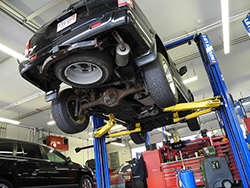
Workers' Compensation is insurance coverage most employers must purchase. It provides benefits for employees and helps them return to work after a work-related injury or illness. Explore auto shop Workers' Compensation options for your business, including resources such as Automobile Repair Workers Compensation.
What is Auto Shop Workers' Compensation?
An employee who sustains an injury or suffers from an illness while on the job can claim Workers' Compensation. It pays for medical treatment and other expenses until the employee can safely return to work.
Types of Auto Businesses that Qualify for Auto Shop Workers Compensation Options
- Sellers and Dealers of new and used vehicles
- Service and Repair Centers that perform repair or service work on mufflers, brakes, engines and other auto parts, including auto dealers, glass replacement or tinting companies and car washes
- Body Repair businesses that work on fiberglass, metal or plastic or perform dent removal, upholstery services and painting
- Parts Stores, including retail and wholesale parts and accessories stores and drivers
- Machine Shops that fabricate, manufacture or rebuild parts that aren't attached to a vehicle
- Recycling and Drivers in salvage yards or dismantling operations
What Are Your Auto Shop Workers Compensation Options?
State guidelines include details on the specific auto shop Workers' Compensation options available to your auto business; for shop-specific guidance, see Repair Shops Workers Compensation Insurance.
Possible expenses covered by Workers' Compensation include:
-
Medical Treatment
Injured or ill employees receive medical treatment, including:
- Medical services
- Emergency room and other hospital treatment
- Surgery
- Medicine and medical supplies
- Lab testing and procedures
- Orthopedic appliances and prostheses
- Physical or occupational therapy
-
Payments for Lost Wages
Employees who are disabled or unable to return to work may receive a portion of their lost wages.
-
Specific Loss Benefits
An employee who suffers a serious and permanent face, neck or head disfigurement or loses the permanent use of sight, hearing or a finger, thumb, hand, arm, toe, foot or leg may receive a specific loss amount.
-
Death Benefits
An employee's survivors may receive a death benefit if the employee is killed on the job.
-
Vocational Rehabilitation
Training and education that helps an injured or ill employee return to work may be covered, including evaluation, retraining and other expenses associated with helping an employee qualify to work in a different job or industry.
Auto shop Workers' Compensation is important coverage that ensures employees receive necessary medical treatment and wage replacement while protecting auto businesses. Review your options and update coverage as your needs change; you can also review broader business options at Auto-Related Business Workers' Compensation, or talk to an agent to compare plans.
Frequently Asked Questions
Who in an auto shop must be covered by Workers' Compensation?
Most employees who perform work for the shop, including full-time, part-time and some contract workers, are covered by Workers' Compensation when required by state law.
What types of injuries does Workers' Compensation typically pay for?
It generally covers work-related injuries and illnesses that require medical treatment, lost wages, vocational rehabilitation or result in permanent impairment.
Does Workers' Compensation cover death benefits?
Yes, if a worker is fatally injured on the job, surviving dependents may be eligible for death benefits under Workers' Compensation.
How can an auto shop owner check what coverage they need?
Owners should review state requirements, assess job tasks and hazards, and discuss options with an insurance representative to ensure proper coverage.