The First Aid Kit
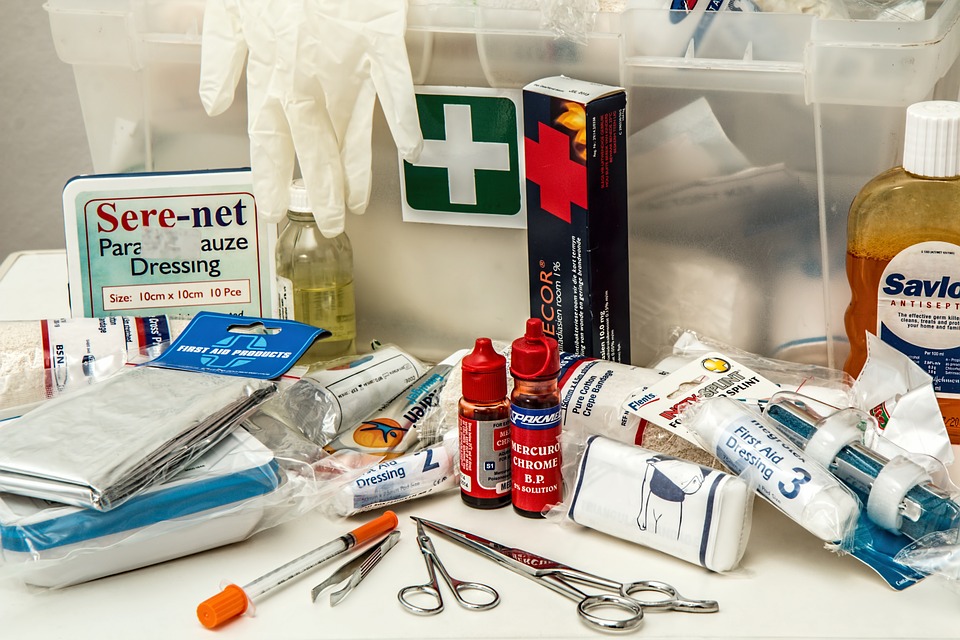 Accidents can happen in any business environment. Be prepared with a stocked first aid kit so employees can handle emergencies when they arise.
The First Aid Kit Box
Any box or soft bag can hold your first aid supplies, but a container marked with the international Red Cross symbol (a white cross on a red background) helps responders find the kit quickly.
Bandages and Gauze
Include a variety of sterile adhesive bandages and gauze pads to treat scrapes, burns, and cuts. Stock an assortment of sizes plus at least 10 yards each of one-inch cloth tape and four-inch gauze.
Medical Tools
Keep surgical scissors for cutting tape and gauze, tweezers, a splint, scalpels, and tongue depressors. Make sure each tool is sterilized and individually sealed.
Gloves and Masks
Surgical rubber gloves and masks reduce infection risk and protect both the responder and the injured person. Store sealed gloves and masks in the kit.
Medication and Ointments
Common items include anti-inflammatory medication, aspirin, antibiotic cream, burn ointment, and antiseptic. You may also stock remedies for diarrhea, nasal congestion, and sore throats as appropriate for your workplace.
Eyewash Station
A portable eyewash kit provides sterile solution to flush chemicals or debris from the eyes. Keep portable eyewash supplies with your first aid kit in addition to any permanent station recommended by safety guidelines.
Other Supplies
Consider storing a blanket and basic resuscitation equipment near the first aid kit; these items can be lifesaving while awaiting professional help.
First Aid Manual
Include a clear, up-to-date first aid manual in each kit so less-experienced responders have a reliable reference. For information on workplace training options, see First Aid Training (Workplace & Events).
Emergency Numbers
Post emergency contact numbers for local medical facilities, fire, and police near each kit and update the list whenever contact details change.
Other Considerations
To align with workplace safety guidelines, consider the number of kits needed per floor and keep injury records where required by employer policies. For guidance on encouraging first aid awareness among employees, see The Importance of Learning First Aid in the Workplace. Also discuss first aid kit details with your safety representative and talk to your agent about coverage considerations.
Frequently Asked Questions
What basic items should every workplace first aid kit contain?
Every kit should include adhesive bandages, sterile gauze, tape, gloves, scissors, antiseptic, and a basic first aid manual.
How often should first aid supplies be checked?
Check kits regularly—at least monthly—to replace used, expired, or damaged items and to ensure everything remains sterile and functional.
Who should be responsible for first aid kit maintenance?
A designated safety officer or facility manager should maintain kits and ensure training is available for staff who may respond to emergencies.
Should medication be kept in workplace kits?
Keep over-the-counter topical ointments and basic pain relievers if allowed by company policy, but avoid storing prescription medications unless individually assigned and authorized.