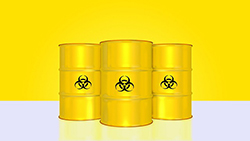
Corrosives are solid or liquid substances that require extreme caution when handling. They are typically strong acids (for example, nitric, sulfuric, chromic, hydrochloric, hydrofluoric, or acetic acid) or bases (for example, ammonium hydroxide, sodium hydroxide, or potassium hydroxide).
Corrosives begin to damage tissue on contact, so exposure to eyes, skin, the digestive tract, or the respiratory system can produce immediate harm. The degree of injury depends on the chemical and its concentration.
Common injuries include severe burns to the skin and eyes, which may cause scarring or blindness. Inhalation of corrosive vapors can burn the airway or lead to pulmonary edema, and ingestion can perforate the mouth, esophagus, and stomach.
Some corrosives are also combustible or react dangerously with other substances, creating fire, explosion, or toxic byproducts. That makes safe storage, segregation, and ventilation essential whenever corrosives are used or stored.
Protect yourself
- Make sure that corrosives are stored in a safe area, away from incompatible substances and, when required, segregated from other corrosives.
- The storage area should be secure, cool, and dry with secondary containment to catch spills.
- If you must transfer corrosive materials between containers, do so with extreme caution and follow established transfer procedures.
- Provide appropriate ventilation anytime a corrosive material is accessed.
- When diluting corrosives, always add acid to water in small amounts to avoid splattering; avoid overfilling and spillage.
- Never reuse a container that previously held a corrosive unless it was explicitly designed and decontaminated for reuse.
- Follow proper disposal protocols for unused corrosives; do not pour them down ordinary drains unless regulations and facilities permit it.
- Wear appropriate personal protective equipment such as chemical-resistant gloves, apron, splash goggles, and, if required, respiratory protection.
- If an accident occurs, get first aid immediately, isolate the area to protect others, and notify the appropriate supervisors or emergency responders.
Remember, it is too late to be cautious after an accident occurs. One mistake can cause costly, painful, and potentially permanent injury.
Businesses that ship corrosive materials should consider Hazardous Material Packing Insurance to help manage the risks of transport and packaging compliance.
Operations that haul or manage hazardous wastes may benefit from the protections offered by Hazardous Material and Hazardous Waste Hauling Insurance Program, which is designed for companies handling these materials.
If you need help assessing risk or coverage options, talk to an agent for guidance tailored to your operations.
Frequently Asked Questions
What immediate first aid should I give for a skin exposure to a corrosive?
Remove contaminated clothing and rinse the affected skin with copious amounts of water for at least 15 minutes, then seek medical attention.
How should corrosives be stored in a workplace?
Store corrosives in labeled, compatible containers in a secure, well-ventilated area with secondary containment and segregation from incompatible chemicals.
Can corrosive waste be poured down a drain?
Not usually; disposal must follow local regulations and facility procedures, and many corrosives require hazardous waste handling and neutralization before disposal.
What personal protective equipment is recommended when handling corrosives?
Use chemical-resistant gloves, splash goggles or face shield, an apron or protective clothing, and respiratory protection when necessary.