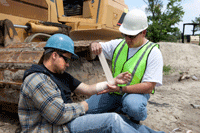
It's tough to run a company. However, taking steps can make your job easier and your workplace safer. You're probably already doing most or all of these things, but just in case, here's a quick review. For guidance on specific hazards in shared spaces, see Corridors and Walkways Safety Plan.
Workplace safety checklist
-
Ensure compliance with safety and health standards. Comply in detail with the OSHA standard that applies to your operations and your workplace. Check state regulations, which take precedence if they're stricter than federal standards. Enforce compliance with your own safety policies.
-
Keep employees informed about hazards. Identify every hazard in every work area and in every job, and make sure employees with potential exposure know what the hazards are, how they're dangerous, how to protect against them, and what to do if they're exposed to a particular hazard.
-
Take appropriate steps to minimize risks. This involves many things, including:
Steps to minimize risks
Well-conceived and implemented workplace safety and health programs.
Routine and thorough inspections and safety audits.
Effective engineering, administrative, and work practice controls.
Frequent and effective employee training.
Routine workplace maintenance.
-
Teach employees to work safely. Train frequently to keep workers up to date on workplace and regulatory changes — and to keep them aware, alert, and prepared to work safely.
-
Monitor performance and provide feedback. Don't assume that workers will use what they learn in training or do what their supervisors tell them to do. For all kinds of reasons, workers will decide to take risks or ignore warnings and instructions. Make sure your supervisors monitor safety performance and provide feedback to maintain safe and healthy behavior.
-
Pay attention to employees' suggestions and complaints. Although you might not be able to use all their suggestions or be thrilled about their complaints, listening to employees is essential to get them on board with your safety and health programs and following your safety rules. Employee participation leads to employee ownership, which leads to employee-driven safety and a safer workplace.
-
Correct problems quickly. Foot-dragging over hazard abatement tells your employees that you don't care about their safety. Whenever a safety or health problem comes to your attention, take swift and effective action.
For businesses with specific operational needs, additional resources may help refine your program — for example, guidance tailored to particular industry settings is available for small operations like Mail and Copy Centers Insurance. If you'd like coverage options or to review your policy, you can talk to an agent.
Frequently Asked Questions
How often should workplace safety training occur?
Training frequency depends on the workplace and hazards, but many employers provide training at hire, on role changes, and at least annually for common risks.
What is the first step in identifying workplace hazards?
Begin with a walk-through inspection of all work areas and tasks, consult employees about their concerns, and review past incidents to spot patterns.
Who is responsible for enforcing safety rules?
Employers are ultimately responsible for enforcement, but effective programs rely on supervisors, safety committees, and employee participation.
What should I do if employees report a hazard?
Investigate promptly, take interim measures if needed, and correct the hazard without unnecessary delay to prevent injuries.