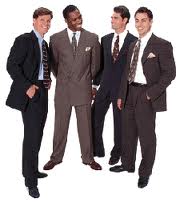
 Dress codes may require employees to wear specific clothing because of the environment or the type of business. In a medical facility, for example, registered nurses might be required to wear a certain color and type of medical scrub. In a manufacturing facility, managers may have to wear shirts with their names on them and a different color hat; employers in regulated industries also follow formal safety rules such as Safety Regulations (Insurance).
Other employers require a specific uniform or type of shoes. Dress codes may forbid jeans or sneakers while requiring business formal attire, or they may forbid hats, sunglasses, or open-toed shoes. Dress codes establish workplace guidelines and can vary by industry, region, and whether the facility is open to the public.
Employers may require employees to wear certain articles of clothing to protect themselves, coworkers, or the public (for example, construction workers wear certain head gear to prevent injury; health care workers wear gloves to prevent transmission of disease). Sometimes employers impose dress codes to make employees easily identifiable to customers and clients or to promote a certain image (for example, a movie theater requires its staff to wear a uniform; a store requires all sales associates to dress in black). A dress code also may prohibit employees from wearing certain items either as a form of protection or to promote a certain image (for example, prohibitions on wearing jewelry or baseball caps, or requirements that workers wear business attire).
So, may an employer require that an employee with a disability follow the dress code imposed on all workers in the same job? Most agencies treat dress codes as "conduct rules," but classify them as the type of conduct rule that must be justified as job-related and consistent with business necessity before being enforced. If a person with a disability requests modification to a dress code as a reasonable accommodation, an employer must consider allowing the modification unless the employer can show that the dress code is required for the job in question.
The EEOC provides several examples of modification to a dress code as guidance.
An employee is undergoing radiation therapy for cancer which has caused sores to develop. The employee cannot wear her usual uniform because it is causing severe irritation as it constantly rubs against the sores. The employee seeks an exemption from the uniform requirement until the radiation treatment ends and the sores have disappeared or are less irritating. The employer agrees, and working with the employee, decides on acceptable clothes that the employee can wear as a reasonable accommodation that meet the medical needs of the employee, easily identify the individual as an employee, and enable the individual to present a professional appearance.
A professional office requires that its employees wear business dress at all times. Due to diabetes, Carlos has developed foot ulcers making it very painful to wear dress shoes. Also, dress shoes make the ulcers worse. Carlos asks to wear sneakers instead. The supervisor is concerned about Carlos's appearance when meeting with clients. These meetings usually occur once a week and last about an hour or two. Carlos and his doctor agree that Carlos can probably manage to wear dress shoes for this limited time. Carlos also tells his supervisor that he will purchase black leather sneakers to wear at all other times. The supervisor permits Carlos to wear black sneakers except when he meets with clients.
If the employee cannot meet the dress code because of a disability, the employer may still require compliance if the dress code is job-related and consistent with business necessity. An employer also may require that an employee with a disability meet dress standards required by federal law. If an individual with a disability cannot comply with a dress code that meets the "business necessity" standard or is mandated by federal law, even with a reasonable accommodation, the individual will not be considered "qualified."
Organizations that serve people with disabilities or operate specialized facilities may have additional operational considerations; for related coverage information, see Developmental Disabilities Services Insurance and Development Disabilities Facilities Insurance.
Courtesy of Beth Loy, Ph.D., Principal Consultant, Job Accommodation Network
Don Phin, Esq. is VP of Strategic Business Solutions at ThinkHR, which helps companies resolve urgent workforce issues, mitigate risk and ensure HR compliance. Phin has more than three decades of experience as an HR expert, published author and speaker, and spent 17 years in employment practices litigation. For more information, visit ThinkHR.
If you need help applying workplace policies or accommodations, you can talk to an agent for guidance.
Frequently Asked Questions
Can an employer require a uniform if an employee has a disability?
Yes — unless a reasonable accommodation would allow the employee to perform the job without creating an undue hardship for the employer.
What counts as a reasonable accommodation for dress code issues?
Accommodations vary by case and may include alternative clothing, modified schedules, or temporary exemptions that still meet safety and identification needs.
Who decides if a dress code exception is allowed?
The employer must engage in an interactive process with the employee to evaluate whether a reasonable accommodation is possible and does not pose undue hardship.
Are there situations where no accommodation is required?
Yes — if the employer can show the rule is job-related and consistent with business necessity or is required by law, an accommodation may not be required.