School starts soon for millions of students across the country. Bus drivers safely transport many of these students to school, and crossing guards protect students and enforce safety rules near school zones. Understand Workers’ Compensation for these student helpers.
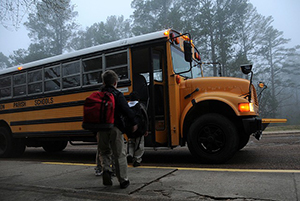
School Bus Driver Risks
Driving a school bus requires more than knowledge of traffic laws. Bus drivers also face a variety of physical and environmental risks as they do their job.
Motor vehicle accidents contribute to one in three school bus driver injuries. Collisions with other vehicles or accidents from poor weather conditions may cause these incidents.
Slips, trips and falls are another leading cause of Workers’ Compensation claims for school bus drivers. Hazards on a bus include backpacks, food wrappers, spilled water, clutter, and wet weather.
Lower back pain can develop when drivers sit in the same position for hours or are exposed to prolonged engine vibrations, which may damage the back and spine over time.
Drivers who transport children with disabilities may suffer injuries related to lifting, transferring, or securing students safely on and off the bus.
Repeatedly setting and releasing the bus’s parking brake can strain the shoulder, elbow, or wrist because the driver must reach and then exert force; these motions can lead to repetitive-strain injuries.
Incidents of violence or threats from passengers can create stressful conditions and contribute to illness. Many school districts lack dedicated support staff on every route, and cameras or other security measures do not eliminate all risks.
If you work as a school bus driver, check with your employer to confirm Workers’ Compensation coverage is in place; school districts, fleet operators and security companies should offer this important protection. For employer-focused options, see Bus Companies Workers Compensation.
School Crossing Guard Risks
While stopping vehicle traffic and escorting students across the street, crossing guards face numerous hazards from nearby traffic and environmental conditions.
Distracted drivers may not see crossing guards even when they wear bright safety vests, because drivers can be attending to children, phones, or other distractions inside the vehicle.
Congested conditions around school zones, driven by increased carpooling and commuter traffic, reduce visibility and increase the chance drivers will encroach on crosswalks or adjacent lanes.
Speeding drivers who rush through school zones put both crossing guards and children at risk despite posted limits and signage.
Employers and fleet operators that manage school transportation should consider specialized coverage and risk controls for personnel who work in or alongside traffic; for related commercial policy options, see Bus Dealer Insurance.
If you work as a school bus driver or crossing guard, check with your employer and ensure you’re covered by Workers’ Compensation. If you're a commuter or parent driving on a school route or through active school zones, slow down and protect the bus drivers and crossing guards who transport and protect kids.
Frequently Asked Questions
Are school bus drivers and crossing guards typically covered by Workers’ Compensation?
Many are covered when they are employees of a school district, contractor, or fleet operator, but coverage depends on employer policy and state rules.
What should I do first if I'm injured while working as a driver or guard?
Report the injury to your employer right away and seek medical attention; follow your employer’s reporting process and any state filing deadlines.
Are volunteer crossing guards covered by Workers’ Compensation?
Coverage for volunteers varies by jurisdiction and the organization that oversees them, so confirm coverage with the school or sponsoring agency.
How can an employer reduce risk for drivers and guards?
Employers can provide training, regular vehicle maintenance, clear walkways, ergonomic equipment, and enforce policies to limit distracted or speeding drivers in school zones.