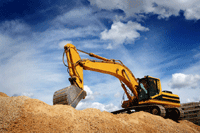
Many modern construction jobs could not exist without flatbeds, pickups, off-highway dump trucks, loaders, scrapers, and bulldozers. Work sites today are commonly populated with heavy equipment that is essential to the job but can become hazardous if not inspected and maintained regularly.
What Does OSHA Say?
- Materials and equipment should be inspected by a competent employee on a daily basis, or more frequently if site conditions require it.
- OSHA provides few specific requirements for mechanized equipment and motor vehicles except in certain situations such as transport or work near power lines; however, equipment left unattended after dark should have reflectors, lights, or barricades so its location is visible.
- Off-highway motor vehicles must be inspected at the start of each shift to ensure essential parts are not obviously damaged and are in safe operating condition. Inspections should include trailer brake connections, emergency stopping systems, hand brake components, tires, horn, seat belts, steering mechanism, coupling devices, operating controls, and safety devices. When conditions require them, defrosters, windshield wipers, lights, reflectors, and fire extinguishers must be checked as well. Any damaged parts must be repaired before use on the job site.
- OSHA does not provide itemized inspection checklists for earthmoving equipment (loaders, scrapers, tractors, bulldozers, graders, off-highway trucks, etc.), but it does specify that seat belts must be provided where required.
- Employers should designate a competent person—someone trained in inspection guidelines—to inspect all heavy equipment frequently and regularly; in OSHA language, “frequently” is typically interpreted as daily.
For information about insurance options for trucks and related exposures, see Heavy Truck Insurance.
Drafting Your Own Inspection Checklists
Because OSHA guidance is limited, safety experts advise employers to consult each machine's manufacturer's manual and combine that information with OSHA recommendations to create site-specific inspection checklists. For additional safety guidance, consider reviewing Heavy Equipment Safety Guidelines.
Many equipment manuals do not include a comprehensive checklist; when that is the case, use the machine's maintenance procedures and operating instructions to build a thorough checklist for each piece of equipment. You can also review insurance and safety considerations related to heavy equipment by visiting Heavy Machinery Insurance.
It can be helpful to develop separate checklists for site safety, mechanical systems, and safety equipment so operators know exactly what to inspect before starting work. Once checklists are developed, explain them clearly to employees and train every operator on their completion before work begins.
Having comprehensive, easy-to-follow inspection checklists for every piece of heavy machinery on site is vital to keeping operations running smoothly and workers safe. For information on policy options for heavy equipment, see Heavy Equipment Insurance, and if you need coverage or want to review options, talk to an agent.
Frequently Asked Questions
How often should heavy equipment be inspected?
Inspections should be performed daily or more frequently if site conditions demand it, and whenever equipment is returned to service after repairs.
Who counts as a "competent person" to perform inspections?
A competent person is an employee trained to identify equipment hazards, perform inspections, and determine when repairs are needed.
Are there standard OSHA checklists for earthmoving equipment?
OSHA does not publish detailed checklists for most earthmoving machines, so employers should rely on manufacturer guidance and site-specific procedures.
What should I do if I find minor damage during an inspection?
All damage that could affect safe operation should be repaired before the equipment is used on the job site.