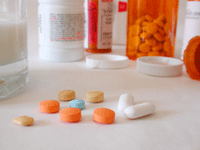
Considering that everything from groceries to gas has skyrocketed during the country's ongoing tough economic times, almost everyone is looking for any way they can to save, even if those savings are counted in pennies.
In an attempt to save a few dollars on grocery bills, a lot of consumers have forsaken their usual name brand purchases for generic, lesser known name brands. After all, almost every product on the shelf, from coffee to detergent, has an option for a cheaper generic version.
Consumers are showing in numbers that they're clearly willing to give up their name brand grocery products to save a few dollars on their overall grocery bill, but are they as willing to give up their name brand drugs for generic drugs?
If you're looking to cut your monthly expenses, the switch should be a consideration. Did you know that generic drugs can cost 60%, 70%, even 80% less than their name brand counterparts? The few pennies you save by choosing a generic brand grocery item is great, but it pales in comparison to the substantial savings you can achieve just by choosing a generic drug.
Generic Drug Availability.
Some people assume from past experiences that they might not have this option available. However, recent years have seen a surge of generic drugs entering the market. It's much easier today than it was just a few years ago to find a cheaper version of most brand-name prescriptions, especially if your prescription has been on the market for several years.
Most brand-name drugs have patent protection, meaning other companies can't produce the same medication under a different label while the patent lasts. When patents expire, those drugs often become available as generics. For more on how patent changes affect prices and insurance, see Impact of Patent Expiration on Medication Costs and Insurance Pricing.
From depression, high cholesterol, diabetes, hypertension, allergies — there's usually a generic drug available for almost any common medical condition. Of course, you'll need to ask your health care provider if there is a generic version available for your current prescription, or if they would recommend a similar generic drug in the same class so you can take advantage of the savings.
Generic Drugs and Insurance Coverage.
We've already discussed that generic drugs are less expensive than their name brand counterparts, but did you know that they often carry a lower co-payment too? If your name brand drug prescription is costing you a co-payment of $50 or so, then you're likely looking at just $10 or so for the generic equivalent.
Health plans and pharmacy programs often structure benefits to encourage generics, which can reduce both your out-of-pocket cost and the plan's cost. For a practical look at prescription benefits and savings options, see Understanding Prescription Drug Benefits and Health Savings Accounts.
Even Bigger Savings.
Certain large retail pharmacies and warehouse stores offer low-cost generic prescription programs that provide additional savings. Many major pharmacies run lists of commonly prescribed generics available at reduced prices.
There are substantial savings from choosing a generic drug over a name brand drug. Even if you prefer name brand groceries, clothes, and so on, you might not want to spend the additional money on a name brand drug. The savings from a few generic prescriptions could fund other purchases or reduce monthly expenses.
If you have questions about switching to a generic or how it affects your coverage, ask your health care provider and consider discussing it with an insurance professional—talk to your agent.
Frequently Asked Questions
Are generic drugs as safe and effective as brand-name drugs?
Yes; generic drugs approved by regulators contain the same active ingredients and must meet the same quality standards for safety and effectiveness.
Will my doctor automatically substitute a generic for a brand-name prescription?
Not always; some doctors will prescribe generics by default, while others may specify brand-name drugs for medical reasons, so ask your provider if a generic is appropriate.
Do generics always cost a lot less than brand-name drugs?
Generally yes, because multiple manufacturers can produce generics after patents expire, which lowers prices, but exact savings vary by drug and pharmacy.
Can my insurance plan require me to use a generic drug?
Many plans encourage or require generics through lower copay tiers, but plan rules vary, so check your policy or contact your plan for specifics.