What do employers need to know about the Supreme Court’s pregnancy accommodation decision in Young v. United Parcel Service?
So, now federal law requires employers to make reasonable accommodations for pregnancy?
Yes.
Always?
Not necessarily. Employers may have legitimate reasons for treating pregnancy differently in some cases, for example when handling ADA-covered disabilities or work-related injuries.
Did the Supreme Court say anything about what might or might not be required from a pregnancy accommodation standpoint?
The Court provided limited detail on specific accommodations. It emphasized that mere inconvenience or expense is not a legitimate reason to refuse pregnancy-related accommodations and that courts may consider whether an employer made similar accommodations for non-pregnant employees.
What was the breakdown on the decision?
The opinions did not reflect a simple ideological split. Justice Breyer wrote the majority opinion; several other justices wrote separate opinions addressing parts of the outcome, and a few dissented.
Don’t a lot of states and cities already have laws requiring pregnancy accommodation?
Yes. Several states and some localities have laws that require pregnancy accommodation and those laws can provide protections beyond the federal baseline. For related legal materials and case summaries, see Employment and Workers' Compensation Case Summaries.
Court Reporters Insurance
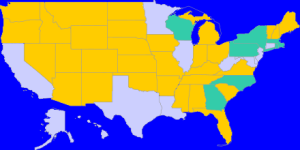
If your business is in a jurisdiction that already requires pregnancy accommodation, follow the applicable state or local law; those rules may be broader than federal requirements.
What should employers in states without specific pregnancy-accommodation laws do?
Employers governed only by federal law should proceed cautiously. Treating pregnancy very differently from ADA disabilities or work-related injury accommodations increases legal risk.
If you prefer to reduce risk, assume pregnancy accommodations may be required when you make similar accommodations for other conditions and use the same interactive process you use for ADA requests.
Begin the interactive process after an employee requests an accommodation or when the need is obvious, and seek the least-disruptive effective accommodation. For practical guidance on applying employment and disability principles, see Legal Considerations in Employment and Disability Accommodations.
Vacant Dwellings Under Repair Insurance
I run a day care and many employees are of childbearing age. What if several employees need accommodation at once?
Try to accommodate when possible. Options include providing a chair or stool, scheduling more frequent breaks, limiting heavy lifting, or shifting staff so that two pregnant employees are not assigned to the same classroom.
Did the EEOC guidance on pregnancy accommodation change?
The EEOC previously advised that employers who provide accommodations for other conditions generally must offer comparable accommodations for pregnancy-related conditions. The Supreme Court criticized some procedural aspects of how the EEOC changed its position, but it did not explicitly overturn the EEOC’s substantive guidance.
If you need individualized advice about how to apply these principles to your workplace practices, talk to an agent.
Additional insurance and compliance topics are available at Public and Federal Official Bonds.
Frequently Asked Questions
Does the decision create a bright-line rule that pregnancy must always be accommodated?
No. The decision does not create a universal rule; outcomes depend on facts such as whether the employer provides similar accommodations to others.
Must I provide the same light-duty job to a pregnant employee if I provide it for injured employees?
Not necessarily, but if you regularly create or offer light-duty jobs for other groups, a court may require similar treatment for pregnant employees.
When should an employer start the interactive accommodation process?
Begin the interactive process when an employee requests an accommodation or when the need is obvious, following the same approach used for ADA accommodations.
Are local and state pregnancy accommodation laws more protective than federal law?
Yes; some state and local laws impose broader obligations than federal law, so follow any applicable state or local requirements.