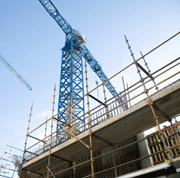
According to the Occupational Safety & Health Administration (OSHA), the second highest cause of death in the construction field is the worker being struck by an object.
Most workers in the construction field are very aware of the struck-by hazards they face when doing roadwork. However, many construction workers might be surprised to know that statistics show most struck-by accidents occur on the construction site.
Heavy equipment is involved in around 75% of struck-by fatal injuries.
Equipment operators that don't follow proper safety protocols not only put themselves at risk, they put workers on the ground at risk of being struck by swinging equipment, crushed under overturned vehicles, or getting pinned by equipment.
Equipment operator procedures
- All vehicles should be checked each shift to ensure that all accessories and parts are in a safe operating order.
- Unless a vehicle has a reverse alarm or the driver has a worker to signal them, vehicles with an obstructed rear view should never be driven in reverse.
- OSHA standard seat belts should be worn unless the equipment is stand-only or doesn't have a rollover protective structure.
- Operators of lifting and dumping devices should ensure that they and all other workers are clear of the area before lifting or dumping.
- Vehicles and equipment should only be operated on maintained and safely constructed grades and roadways.
- Parked vehicles and equipment should have the parking brake set. If parked on an incline, the wheels should also be chocked.
- If not in use, bulldozer and scraper blades, dump bodies, end-loader buckets, and other overhead equipment should be lowered or blocked, with the controls in a neutral position.
- All vehicles should have adequate safety devices, such as braking.
- There should be a cab shield/canopy on any vehicle loaded by a power shovel, loader, crane, and such.
- The load and lift capacity of a vehicle should never be exceeded.
- Any construction taking place near a public roadway should have traffic signs, flagging system, and barricades.
- Workers must wear warning clothing, such as orange or red vests, to ensure they're clearly visible. Warning clothing must be reflective if working at night.
Workers must also be mindful of overhead falling objects. This is a particular concern when working beneath scaffolding, cranes, or any area that overhead work is being done.
There's also the danger of objects that potentially could be propelled through the air and strike a worker, such as a power tool or an activity involving something being pried, pulled, or pushed.
Protecting workers from falling and flying hazards
- The first line of head protection is having a hardhat on.
- Workers in areas where tools or machines could produce flying particles should wear shields, safety goggles, or safety glasses.
- Materials should be stacked so that they don't collapse, slide, or fall.
- Scaffolding areas should feature toe boards, guardrails, screens, debris nets, canopies, or platforms to prevent or catch falling objects. Tools and materials should also be secured to prevent them from falling.
- Hazard areas should have warning signs and be barricaded.
- Protective guards on tools, such as lathes and saws, should be inspected for good working condition before use.
- Never use a power-actuated tool unless trained to do so.
- Try not to work in areas where underneath loads are being moved.
- The lift capacity of hoists and cranes shouldn't be exceeded.
- All components of a hoist and crane, such as wire, hooks, and chains, should be inspected for good working condition before use.
For organizations that operate heavy machinery, reviewing Construction and Mining Machinery Insurance can help identify coverage gaps related to equipment loss or liability.
Dealers and vehicle owners may also review Insurance for Boom Truck Dealerships and Truck Bodies Insurance for related coverage options.
Site managers tracking incident trends and best practices may also find the Construction Industry Safety Report a useful resource for benchmarking safety measures.
Employers seeking policies tailored to on-site equipment should compare options such as Construction Machinery Insurance to ensure appropriate protection for both vehicles and operators.
If you need help choosing coverage or reviewing your options, consider contacting and ask an agent to review your situation.
Frequently Asked Questions
What pre-shift checks should equipment operators perform?
Operators should inspect brakes, lights, steering, tires, safety devices, and confirm that accessories and parts are in safe operating order before each shift.
When is a reverse alarm required?
Vehicles with an obstructed rear view should have a reverse alarm or a designated worker to signal the operator before the vehicle is driven in reverse.
How can sites reduce the risk of falling object injuries?
Use hardhats, secure tools and materials, install toe boards or debris nets on scaffolds, and mark or barricade hazard areas to reduce risk.
Who should inspect hoists and cranes?
Trained and competent personnel should inspect all hoist and crane components, such as wire rope, hooks, and chains, before use.