Overview
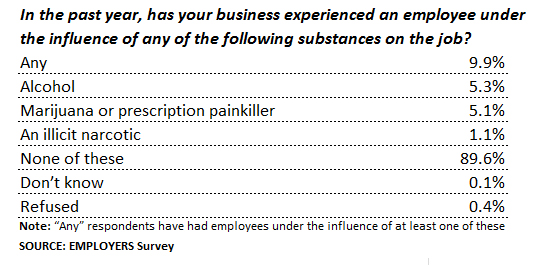 Employee impairment from alcohol, prescription medications, and illegal drugs creates safety, productivity, and liability risks for small employers.
Surveys and industry reports show that a measurable share of businesses have encountered staff who reported for duty while impaired, and many owners are seeking practical steps to reduce exposure and manage claims.
For employers evaluating insurance and risk-transfer options that touch on treatment providers, see Substance Abuse Centers Insurance.
Key takeaways
- Employee impairment on the job increases the chance of injury, lower productivity, and larger workers' compensation costs.
- Clear policies, training, and a consistent response plan reduce risks and improve workplace safety.
- Insurers and specialized coverages can support employer programs and claim management.
How it works
Workplace impairment risk is managed through a combination of written policy, prevention activities, testing where appropriate, and coordinated response to incidents.
Employers typically define prohibited conduct, outline disciplinary steps, and provide access to support such as employee assistance programs (EAPs) or treatment referrals.
For guidance on clinical options and outpatient treatment coordination that employers may reference when building return-to-work plans, see Workplace Drug and Alcohol Abuse.
What it may cover (and what it may not)
Workers' compensation covers job-related injuries and illnesses, which can include incidents where impairment contributed to an injury if the event occurred in the course of employment.
Insurance does not generally cover non-work-related substance problems, and disciplinary matters or criminal behavior are typically handled under company policy rather than a claim payment.
Employers seeking policy options and resources to build prevention and incentive programs can review insurance products designed for safer workplaces at Workplace Drug and Alcohol Abuse, OSHA Programs, and Safety Incentives.
Common mistakes to avoid
Relying solely on informal conversations instead of written policy leaves employers open to inconsistent enforcement and potential legal challenges.
Failing to document incidents, investigations, and corrective actions makes it difficult to manage repeat issues or defend decisions.
Assuming all impairments are the same is risky; prescription medication side effects, alcohol, and illicit drugs may require different workplace responses and return-to-duty plans.
Questions to ask an agent
Does our workers' compensation policy or optional endorsement offer consultation or loss-control services for impairment prevention?
What coverage or claim services are available if an on-the-job injury involves suspected impairment?
Can the carrier help coordinate with benefit vendors or provide recommendations for EAPs and treatment partners?
Next steps
Start by reviewing or drafting a clear workplace impairment policy that covers expectations, testing procedures if used, return-to-work requirements, and confidentiality safeguards.
Provide supervisor training on recognizing impairment signs and on the steps to take after an incident, including documentation and how to support affected employees safely.
Coordinate with your insurance representative to understand how your coverages interact with incident response and claim handling, and if you want direct assistance, ask an agent to review options and loss-control services.
Frequently Asked Questions
How common is on-the-job impairment among small businesses?
Surveys show a notable minority of small businesses report at least one employee arriving to work impaired, though prevalence varies by industry and region.
Should all employers use drug testing?
Testing can be a useful tool when implemented with clear policy, legal review, and consistent application, but it is not the only or always the best strategy for every employer.
Can workers' compensation pay for treatment for substance use?
Workers' compensation may pay for treatment that is directly related to a work injury, but routine addiction treatment for non-work-related conditions is usually outside workers' compensation coverage.
What immediate steps should a supervisor take if they suspect impairment?
Ensure safety, remove the employee from hazardous duties, document observations, and follow the employer's investigation and reporting procedures.