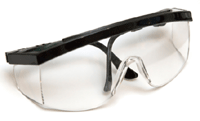
There are currently around a million American workers that have suffered some degree of slight loss due to an eye injury. In fact, it's estimated that there are some 700,000 workers injuring their eyes at work every year in America.
Such injuries can be financial nightmares for employers. While the above statistics may seem discouraging, 90% of eye injuries in the workplace can actually be avoided by the employee wearing the appropriate safety eyewear for the job.
For related employee coverage and preventive resources, see Vision Care Insurance and review training materials such as Safety Training and Computer Eye Strain.
Other related policies to consider include Television Stations Insurance.
Preventing workplace eye injuries
- Assess the situation - study your eye-related incident and accident reports. Is there any area with a history of problems? Carefully assess day-to-day operations at your business. Do work areas, equipment, access routes, or operations pose any hazards to the eyes?
- Have the appropriate eyewear available - make sure that the protective eyewear you select is designed for the specific hazard/duty and is in compliance with current OSHA (Occupational Safety and Health Act) standards.
- All participate, zero tolerance - initiate a mandatory eye protection program for all operation area employees. Such a broad program is easier to enforce than one requiring eye protection in certain areas, but not others. Clearly define and enforce the disciplinary actions for infractions.
- Eyewear doesn't protect if it doesn't fit - eyewear should comfortably fit a worker's face and never be borrowed or shared between workers. Only a trained eye care expert should fit and repair eyewear. Make it clear that workers are responsible for keeping up with their eyewear.
- Routinely test vision - if an employee can't see correctly, then they're likely to eventually have an accident. Uncorrected vision problems can be avoided by making vision testing a component of employee physicals.
- Plan for accidents - plan ahead for potential emergencies by having eye injury first-aid procedures in place; training workers in first-aid and identifying any employees with advanced medical training; and having easily accessible eyewash stations, especially in chemical areas.
- Continue educating your employees - education is key to preventing accidents. Include eye safety and protective eyewear in new employee orientations. Continue the education in safety meetings, educational programs, and training programs.
- Positive reinforcement - make sure that management and supervisors are following the same rules.
- Put your safety policy in writing - make sure that you've distributed a copy of your safety policy to your employees and had them sign and date it. This should be routine during new employee orientation. Additionally, a copy of the policy should be displayed in a common area, such as a memo board or break room.
- Reassess your policies - your ideal goal is zero eye-related accidents and injuries. Periodically review your accident prevention policy to see how well it's meeting your goal and make any necessary changes.
For guidance on preventing vision strain related to computer work, see Preventing Computer Vision Syndrome and Cyber Threats.
Businesses with equipment-based risks may also want to review Computer Related Services Insurance for additional options.
If you need tailored coverage or want to review your options, talk to an agent about policies that fit your workplace risks.
Frequently Asked Questions
What type of safety eyewear should employees use?
Choose eyewear rated for the specific hazard (impact, chemical splash, or optical radiation) and compliant with workplace safety standards.
How often should protective eyewear be inspected or replaced?
Inspect eyewear regularly for scratches, cracks, or loose fittings and replace immediately if damaged or when protective properties are compromised.
Are prescription glasses adequate for protection?
Standard prescription glasses usually do not meet safety standards; use prescription safety eyewear or add certified protective overglasses.
What should an employer do after an eye injury occurs?
Follow first-aid procedures, seek medical attention, document the incident, and review controls to prevent recurrence.