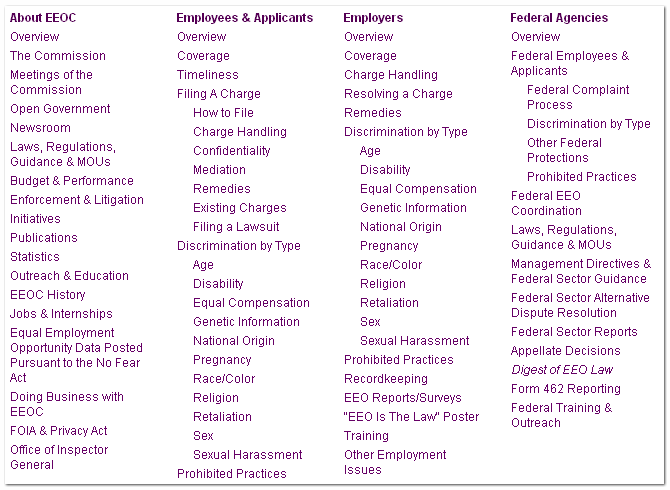
Although I disagree with parts of the EEOC’s agenda, it’s important to note what the agency has done well: providing accessible information for both employees and employers. The primary purpose of these federal agencies is protecting workers, but they and related organizations have also improved the availability of employer-focused guidance. Employers should pay attention to trends in discrimination claims and take steps to reduce risk.






WHAT I LEARNED FROM SCIENTIFIC AMERICAN MIND
-
“Any Excuse for Busyness.” People who find reasons to occupy their time with activity often rate themselves as happier. Waiting time—at airports, on trains, or in cars—can be turned into productive learning time.
-
“Beware Your Beverage.” Research finds people judge alcohol drinkers as less intelligent, even when they are drinking themselves. If you are interviewing, networking, or negotiating, a nonalcoholic option can be the wiser choice.
-
“When Mom Has Favorites.” Children who experience unequal treatment can carry sensitivity into adulthood. In the workplace, perceived favoritism can create resentment, guilt, or extra demands; managers should be mindful of unintended consequences when treating employees unequally.
-
“The ‘Me’ Effect.” People often misjudge their own influence on others. Researchers describe a “trait-affected presence” that causes certain emotions to spread depending on who is present, so self-awareness about how you affect coworkers matters.
-
“Their Pain, Our Gain.” People sometimes feel schadenfreude—pleasure at another’s misfortune—which can intensify prejudice and harmful group behavior. Managers should watch how competition and group dynamics can foster negative emotions.
-
“What Makes a Good Parent?” A list of ten important parenting factors can also inform management: love and affection, stress management, relationship skills, autonomy, education, life skills, behavior management, health, religion, and safety. Many of these translate directly to effective supervision and team development.
Top 10 parenting factors (applied to management)
- Love and affection
- Stress management
- Relationship skills
- Autonomy and independence
- Education and learning
- Life skills
- Behavior management
- Health
- Religion
- Safety
-
“Dunbar’s Number.” Human social capacity appears to cap at roughly 150 meaningful relationships, which helps explain why extremely large social networks often lack deep connections.
-
Psychologists and magicians share insights about attention and perception. Key findings include:
How magicians exploit attention
- Attention is “hackable”: focusing on one thing suppresses peripheral awareness.
- Magicians use “top down” and “bottom up” techniques to direct focus and distract from other actions.
- Natural, purposeful gestures are less likely to be scrutinized, making them useful for concealment.
- Verbal patterning can create internal dialogue that slows reaction and increases confusion.
- “Time misdirection” — delaying method and effect — prevents observers from linking cause and result.
The practical bottom line: be aware of techniques that divert attention and apply that awareness to communication and training.
Reading outside HR can spark useful ideas for managing people. For employers looking for more on how regulatory trends intersect with workplace programs, see EEOC Targets Employers' Wellness Programs and Cybersecurity Concerns for related analysis and Policy Changes in Workers' Compensation for implications on coverage and compliance.
For coverage of social-service program requirements, see DUI Classes/Social Services Program Insurance.
We’ll continue to share government-related content and provide members with strategies, tools, and support to reduce the risk of costly employee claims. For guidance on business continuity and systems resilience, review Redundant Systems and Insurance Considerations.
For operational exposures related to waste handling and refuse operations, see Transfer Station/Refuse Haulers Program.
When you need personalized help, ask an agent.
Frequently Asked Questions
How can employers reduce the risk of discrimination claims?
Create clear policies, train managers on consistent treatment, document decisions, and provide accessible complaint procedures.
Are wellness programs risky from a compliance standpoint?
Wellness programs can raise privacy and discrimination concerns; structure them to be voluntary, nondiscriminatory, and compliant with applicable regulations.
What should employers do when an employee files a claim?
Respond promptly, preserve records, follow internal procedures, and seek guidance from HR counsel or a qualified advisor.