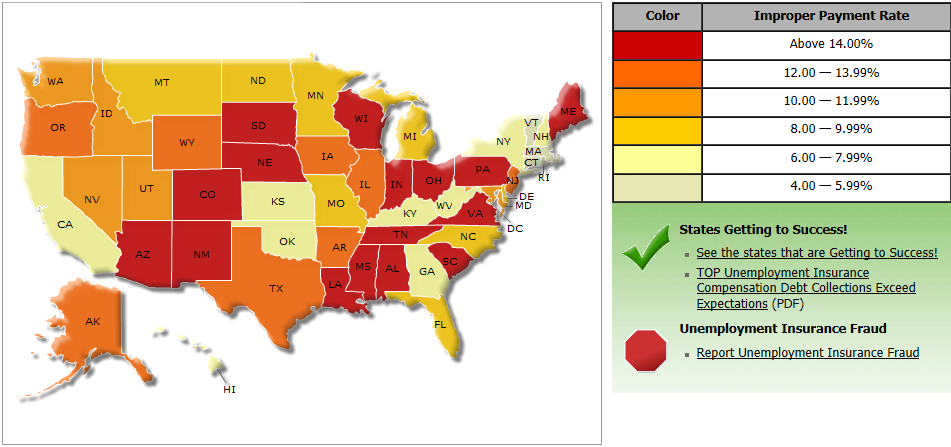
Fraudulent payment of unemployment insurance benefits is a nationwide problem, accounting for as much as 14% of total payments in some states.
The chart shows that most states are paying anywhere from 8%–12% extra in claims, and when you consider that payment periods for many claims have been extended in recent years, that represents a substantial cost.
Most employers give up on fighting unemployment claims because they find it very difficult to win them. Lawyers are often expensive to hire, and many employers have little experience with administrative hearings; that is one reason consultants have created a niche defending employers.
For related fraud issues see Understanding Workers Compensation and Fraud. More on payment fraud is available at Wire Transfer Fraud (Crime).
In general, unemployment insurance is available to employees who lose their jobs "through no fault of their own," as determined by state law. Although federal law sets guidelines, each state administers its own unemployment insurance program.
See Understanding Unemployment Insurance Benefits for more on state programs and coverage. For information on employer-side coverage options, see Involuntary Unemployment Protection.
All but three states fund their programs from a tax imposed solely on employers. Employees generally receive payments for a maximum of 26 weeks in most states unless the period is extended in times of high unemployment.
Employees are required to look for other work and are prohibited from receiving benefits once they obtain it; this requirement is a common area where fraudulent claims arise.
In most states, an employee fired for misconduct can be denied unemployment benefits. Generally misconduct must be a willful act, such as excessive absenteeism, dishonesty, or drug or alcohol use that damages the company; mere poor performance or isolated mistakes usually will not qualify as misconduct.
"An individual is disqualified from unemployment compensation benefits if … he or she has been discharged for misconduct connected with his or her most recent work." Misconduct is limited to conduct evidencing such willful or wanton disregard of an employer's interests as is found in deliberate violations or disregard of standards of behavior, which the employer has the right to expect of his employee, or in carelessness or negligence of such degree or recurrence as to manifest equal culpability wrongful intention or evil design, or to show an intentional and substantial disregard of the employer's interest or the employee's duties and obligations to his employer. On the other hand, mere inefficiency or unsatisfactory conduct, failure in good performance as the result of inability or incapacity, inadvertencies or ordinary negligence in isolated instances, or good faith errors in judgment or discretion are not deemed "misconduct" within the meaning of the statute."
If you intend to contest an unemployment claim, make sure you have documentary support such as a signed statement under oath from the claimant's manager or coworkers, photos, or written warnings. Be aware that contesting a claim can provoke further action from the former employee, including legal representation or additional filings.
Many companies have high unemployment claims because of avoidable turnover. If turnover is a problem, ask what you can change in hiring, training, or supervision to reduce unwanted separations, or talk to an agent about risk-management strategies.
Frequently Asked Questions
What evidence helps when contesting an unemployment claim?
Documentary evidence such as written warnings, attendance records, performance reviews, and sworn statements from supervisors or coworkers is most helpful.
Can an employee collect benefits if they were fired for poor performance?
Typically poor performance alone does not constitute disqualifying misconduct; deliberate or repeated disregard of duties is more likely to disqualify a claimant.
Who pays for unemployment insurance taxes?
Most states impose unemployment insurance taxes on employers, though a few states use other funding methods or share costs with employees.
How long after being hired can an employee claim unemployment?
Eligibility generally depends on earnings and work history during a base period, so very short employment may not qualify, but rules vary by state.