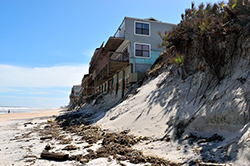
As a contractor, your contractors pollution insurance covers any erosion you cause. You should follow federal, state and local erosion control guidelines to prevent runoff, protect ecosystems and avoid fines.
If your projects involve design or build work, consider Design/Builders Pollution Liability Insurance to help manage environmental risks on site.
Erosion control techniques
-
Reforestation
Restore or restock woodlands around the property to increase soil retention and reduce degradation. This approach is relatively simple to install — you typically need seedlings or saplings, dibbers and measuring ropes.
-
Buffer strip
Narrow strips of permanent vegetation slow runoff and trap sediment. The root systems help control soil loss from wind and reduce landslide risk.
-
Geotextile roll
Made from coconut, straw or similar fibers bound with mesh, geotextile rolls cover newly graded soil and prevent bank erosion. Vegetation can be planted over the roll to increase stability, and the materials biodegrade over time. They are easy to install and low maintenance, best for small streams and stable water levels.
-
Brush mattress
A system of branches and stakes used on banks near perennial streams, brush mattresses are biodegradable and relatively easy to install. They can be washed away in heavy rain, so plan for repairs after storms.
-
Gabions
Gabions are cages or containers filled with small rocks and placed on highly erodible banks. They are sturdy, adaptable and useful in many locations; keep the supporting footing secure and inspect the mesh regularly for damage.
-
Riprap
Riprap consists of rubble and rocks of various sizes used on embankments, bridge abutments, shorelines and streambeds. It is effective where slopes are stable — avoid riprap on slopes steeper than about 2:1, which can make the material unstable.
-
Rootwad composites
These stabilize stream banks, reduce flow velocities and create aquatic habitat by incorporating interlocking tree material at the base of slopes. They are more complicated to install but cost-effective for long-term stability.
-
A-Jacks
A-Jacks are interlocking cement units placed at the base of slopes to increase stability in high-erosion areas. They are available in various sizes but do not biodegrade.
-
Tree revetment
Anchor logs or large timber to the bank to reduce water flow velocity; this method is not recommended for very high-erosion sites and requires ongoing maintenance.
Using these techniques helps protect your job site and the environment. Determine which method fits each project, inspect controls regularly, and update your contractors pollution insurance policy as conditions or activities change.
If your project includes on-site testing or lab work, you may also want to review options like Construction/Environmental Testing Labs Insurance for additional coverage considerations.
When you need guidance on coverage or implementation, talk to an agent about your specific risks and controls.
Frequently Asked Questions
Does contractors pollution insurance cover erosion damage?
It commonly covers erosion-related pollution incidents caused by your operations, but coverage details vary by policy, so check your policy language and exclusions.
Which erosion control method is best for small streams?
Geotextile rolls and brush mattresses are often effective for small streams because they are easy to install and support vegetation growth for long-term stability.
When should I use hard structures like riprap or gabions?
Use hard armoring where slopes are stable and erosion forces are strong; ensure proper engineering and regular inspections to prevent failure.
How often should erosion controls be inspected?
Inspect controls after major storms and at regular intervals during construction to repair damage and maintain effectiveness.