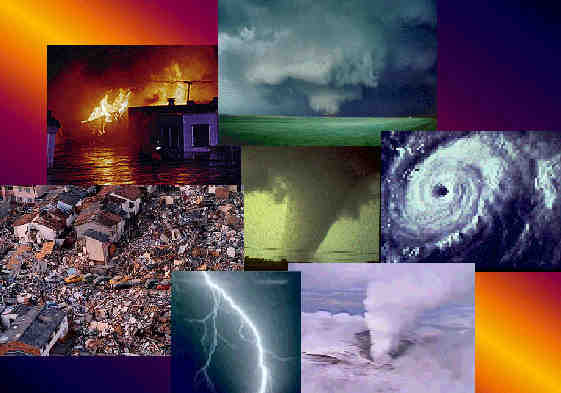
 As the fun and sun of summer arrives, so does the threat of many natural disasters. Happenings like earthquakes are always a threat, but floods, wildfires, hurricanes, tornadoes, and similar events are more apt to strike in the warmer months. There are three very important steps you can take to limit the effect natural disasters have on your life and property and expedite your recovery process.
Three important steps
- Planning.
Planning basics
Always have several escape routes mapped out. Each family member should know where to meet, who to call for help, and where to call to signal their safety to other family members. Your family safety plan should be posted in a central location and the escape route and emergency contact numbers should be reviewed every six months.
If possible, store irreplaceable items and documents like birth, marriage, death, and divorce certificates; passports; deeds; social security cards; expensive jewelry; and heirlooms in a safety deposit box during high-risk seasons if you live in an area frequently hit by natural disasters. You may also put video or photo documentation, a listing of serial numbers, appraisals, and receipts for these items in your safety deposit box.
Scan your photos to your computer. You can store your photos with an online storage service or make a CD to place in your safety deposit box.
You should have an emergency overnight bag ready to go for every person and pet in your family and always keep a credit card, emergency cash supply, and personal identification with you during high-risk seasons.
- Prevention
Reducing risk
Aside from living in an area not prone to natural disasters, there isn't much you can do to avoid them. However, unlike most other natural disasters, wildfires can sometimes be prevented. You can personally reduce risk by being careful when using open flames, maintaining your chimney flue, and not throwing cigarettes outdoors, though wildfires can still occur despite precautions.
You can help to protect your home by creating a defensible space. Some insurers now inspect properties for defensible space before issuing or renewing policies. Your insurance agent, local agricultural organizations, and federal agencies such as the American Red Cross and FEMA are valuable information sources on creating defensible spaces. Flood damage can also be limited by planning water diversions and landscaping as protective devices.
- Insurance
Reviewing your coverage
Last, but certainly not least, you should make sure your existing insurance is providing adequate protection. For example, your regular homeowners policy most likely won't provide coverage if a boulder falls or rolls into your home since such damage is often classified as earth movement and would need separate earthquake coverage.
Your homeowners policy may also not cover damage from a water or sewage system outside your home breaking, or damages from a flash flood, which typically require specific flood insurance. If you obtain flood insurance, remember that coverage often doesn't become effective for 30 days and basements may still be excluded.
Flood planning
Many people live in possible flood areas and don't realize it. For example, those living in areas that recently had a wildfire and those living downstream from a dam could have problems with flash flooding. Those living in or near a construction area could find their risk increased due to changes in water flow patterns. You can assess your risk of flooding by contacting your local building authority and your insurance agent.
Since basements aren't usually covered by typical flood insurance policies, those with a basement need a plan for moving valuables to upper levels. Do make sure that you have an escape plan, as discussed above, in place for your family. For specialized emergency coverage options, see Advanced Life Support (ALS) Insurance.
Hurricane planning
Most people in areas prone to hurricanes are already on high alert during hurricane season, but keep in mind that hurricanes and their stormy remnants are often unpredictable. Flood planning from above applies to hurricane planning as well. Additionally, have a supply of nails and plywood ready so you can board up windows before evacuation if needed.
Remember: if local authorities issue an evacuation order, follow it promptly and take your emergency evacuation bag.
Wildfire planning
Wildfires can begin unnoticed and spread rapidly with little forewarning. An effective evacuation plan is vital in many cases. If you have forewarning, stay tuned to emergency broadcasts and follow evacuation directions from local authorities. Remember to take your emergency evacuation bag with you.
If you're under a warning but haven't been advised to evacuate yet, you may have time to turn off gas lines and propane tanks, soak your roof and shrubs with water, move flammable furniture to the center of rooms, and relocate large valuables to the safest location possible.
Tornado planning
Unlike many other events, leaving your home during a tornado warning is seldom a wise move. Everyone in your family should know where to go during a tornado warning. While a basement is ideal, not everyone has one; a central room without windows and overhead objects is preferable. Be sure your emergency kit and phone numbers are in your designated room.
Local responders and emergency teams play a critical role during tornadoes; for information related to responder coverage options, see BLS Insurance for First Responders.
Earthquake planning
Follow similar precautions to those for tornadoes: identify safe spots in each room (under sturdy furniture or against interior walls), secure heavy objects, and keep an emergency kit at home, in your vehicle, and at work. Check to make sure your child's school is prepared and that family members know how to reunite if separated.
Frequently Asked Questions
How soon should I buy flood insurance?
Flood insurance typically has a waiting period before coverage takes effect, often around 30 days, so buy it well before high-risk periods when possible.
What should be in an emergency overnight bag?
Include water, nonperishable food, prescription medications, copies of important documents, a flashlight, a battery-powered radio, extra batteries, personal hygiene items, and pet supplies.
Can I prevent wildfire damage to my home?
You can reduce risk by creating defensible space, using fire-resistant landscaping, and maintaining chimneys and outdoor equipment, but prevention is not guaranteed.
Where is the safest place in a house during a tornado?
A basement is safest; otherwise use a central interior room on the lowest floor away from windows and exterior walls.