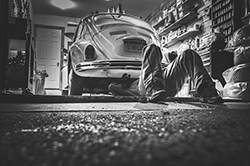
As a mechanic, you spend your workdays fixing cars, trucks and a variety of machines. While the job is different every day, it's also risky. Workers' Compensation for mechanics is an important insurance product that provides medical care and financial support if you're injured or become ill because of your job.
Workers' Compensation Mechanics Risks
Mechanics face numerous risks on the job every day. In fact, this job is one of the most dangerous careers in the United States.
Falls and Slips
Oil, gas and other fluids make shop floors slippery, and it's easy to trip over parts or tools on the ground. Falls and slips could easily cause a fracture, sprain or other injury.
Being Struck by a Tool or Vehicle Part
Over one in four accidents occur when something like a dropped tool or loose part strikes you as you work. These accidents could cause a concussion, sprain or other injury.
Burns
If the vehicle you work on is hot or you change hot fluids, you risk a serious burn.
Cuts
Operating manual or power tools is essential as you disassemble and assemble vehicles, but if you're cut, the resulting laceration could require stitches or result in a more serious injury.
Getting Caught in Equipment
Moving tires and engines pose a serious risk for mechanics. You could be injured or disabled if caught in equipment.
Falling Objects
Even though you secure a vehicle on a jack, lift or rack, it could fall off and pin you underneath, causing a serious injury or disability.
Strain
Overexertion from repetitive lifting or other repetitive movements can cause carpal tunnel or arm, wrist, elbow, back or leg strain. Lifting heavy objects, sitting or standing in one position for a long time or bending over might also cause strain.
Toxic Exposure
Chemicals, gasoline additives and other substances can cause long-term illnesses like respiratory disease or cancer when you're exposed to them over time. Lead is another risk that causes anemia, kidney disease and other illnesses.
What Does Workers' Compensation for Mechanics Cover?
Workers' Compensation covers expenses related to injuries or illnesses you receive on the job. It can pay for medical treatment, a portion of lost wages, and in some cases education and job training to help you return to work.
How to Prevent Workers' Compensation Risks for Mechanics
- Always secure vehicles.
- Wear appropriate safety equipment.
- Use proper lifting techniques.
- Employ tools or lifts when handling heavy objects.
- Keep the shop clean and free of trip hazards.
- Take frequent breaks to reduce fatigue and strain.
The Workers' Compensation risk for mechanics is high. Protect yourself as you work and make sure your employer carries the right Workers' Compensation insurance in case you're injured or become ill on the job.
If you work in a repair shop, learn more about Automobile and Truck Repair Shops Workers' Compensation and the specific risks for that setting.
For information about insurance options for higher-risk trades, see High Risk Workers Compensation. If you need guidance, you can talk to an agent about coverage available for your shop.
Frequently Asked Questions
What types of injuries does workers' compensation typically cover?
Workers' compensation generally covers injuries and illnesses that arise out of and in the course of your job, including fractures, burns, lacerations and strains, as well as some occupational diseases.
Are illnesses from chemical exposure covered?
Occupational illnesses caused by repeated or prolonged exposure to toxic substances are often covered, but coverage and proof requirements vary by jurisdiction.
What should I do immediately after a workplace injury?
Report the injury to your employer right away, seek medical attention, and follow any required reporting procedures to preserve your right to benefits.
Can I receive wage replacement while I recover?
Many workers' compensation programs provide partial wage replacement if you are unable to work due to a covered injury, subject to program rules and waiting periods.