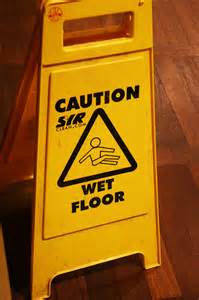
You see them all the time: those yellow floor signs warning people about wet floors after mopping or a spill. They may look ugly, but they serve an important purpose.
A business has a responsibility to keep its environment safe for employees and visitors, and many common hazards can be prevented with simple precautions.
There are three types of injuries that account for more than ninety percent of incidents on business premises.
Most common premises injuries
- Slip and fall accidents
- Negligent security
- Attractive nuisance
Slip and Fall Accidents
Most businesses report that slip and fall incidents make up the majority of premises injuries, which is why clear wet-floor signage and prompt housekeeping matter.
See Sign Lettering Insurance for additional information on sign standards and materials.
For guidance on proper signs and tags, see Workplace Safety Signage and Tags.
Slip and fall hazards are not limited to indoor floors. Cracks in sidewalks, broken concrete, uneven pavement, and parking lot potholes also create risk and should be repaired promptly.
Until repairs are completed, cones or other warnings help people avoid the hazard and reduce liability.
Negligent Security
- Arenas and stadiums
- Motels
- Parking lots
- Hotels
- Apartment buildings
Businesses must take ordinary precautions to protect visitors from criminal acts by third parties. Failure to provide basic security can lead to claims when customers or guests are injured or robbed on the premises.
Common security measures include lighting, cameras, visible warnings, and, in higher-risk locations, on-site guards or emergency call systems.
Common security measures
- Security lights
- Video cameras
- Warning signs
- Security guards for businesses in high-crime areas
- Emergency call stations or sirens in parking areas
For more information on managing workplace risk and liability, see Workplace Safety and Risk Management.
You may also find helpful resources at Floor Waxing Insurance when considering floor care and maintenance policies.
Attractive Nuisance
The attractive nuisance doctrine protects children who are injured by hazards that attract them, even if they technically trespassed to reach the hazard.
The doctrine traces to an early case involving a child injured on a railroad turntable, where the court found the owner had to take steps to prevent access because the hazard was effectively an invitation to curious children.
Top attractive nuisances
- Construction sites
- Swimming pools
- High-voltage power lines
- Water hazards caused by rain or abandoned quarries
- Refrigerators and freezers
- Abandoned cars and unlocked parked cars
- Working farms
- Excavation trenches, sewer drains, wells, drainage ditches, quarries, holding tanks, and open pits
- Trampolines, jungle gyms, play sets, tree houses, and skateboard ramps
- Railroads
Some of these situations produce mixed results in court, while others are well settled. The best way to reduce liability is to limit access to hazards and use barriers, fencing, or warnings as appropriate.
Schedule an appointment with your business insurance advisor to confirm you have the correct liability coverage and to request a liability checklist for a self-audit, or talk to an agent about your options.
Frequently Asked Questions
Do I always need a wet-floor sign when cleaning?
Yes; using a visible caution sign when floors are wet is a simple, accepted step to warn visitors and reduce the risk of slips.
What security measures are expected for a small business?
Common expectations include adequate lighting, clear sightlines, visible warnings, and cameras or staff presence in higher-risk areas.
How can I reduce attractive nuisance liability on my property?
Restrict access to hazards with fencing or locks, post warnings, and remove tempting hazards when possible to make the site less attractive to children.
Should I review my insurance after fixing a hazard on my property?
Yes; discussing changes with an insurance advisor helps ensure your coverage matches the current operations and risk profile.