
Since I hadn’t been to a SHRM convention in a number of years, I felt it was my duty to attend one since it was occurring here in San Diego.
After poring through the workshops, speaking to dozens of HR professionals and vendors, and roaming the entire exhibit hall, here’s what I observed:
Convention highlights
- HR is BIG business. There are approximately 10,000 attendees and the convention takes up the entire San Diego Convention Center (which is quite large). There were more than 150 concurrent sessions over the four days of the convention. The keynote speakers were Al Gore and Steve Forbes, and other well-known names included Marcus Buckingham, Dave Ramsey, and David Ulrich.
- I’m sure many of the attendees were there to earn up to 29 recertification credits in one lump toward their PHR, SPHR, or GPHR certifications (60 are required every three years).
- The convention discussed a wide variety of subjects; see the workshop topics listed below.
- The breadth of workshops offered was as broad as the HR experience itself: everything from hiring employees to letting them go and everything in between. Frankly, I didn’t see much new except everybody’s increased panic on how to manage healthcare benefits.
- For an HR professional to attend the program it cost at least $1,200 in registration fees, plus $750 on room and board, and $500 in plane fare unless they drove here. This expense alone rules out many small company practitioners.
- The company size of attendee broke down this way:
- Fewer than 100: 16.59%
- 101-499: 22.90%
- 500-999: 12.25%
- 1,000-9,999: 27.09%
- Greater than 10,000: 21.80%
When it comes to the “weight” of the total employee population, companies with more than 1,000 employees dwarfed the conference.
Workshop topics
- Employment law and legislation
- Strategic management
- International management
- International HR
- Total rewards
- Personal and skilled development
I spent time going through the enormous vendor floor. According to SHRM, there were more than 565 executive exhibitors in a variety of groups:
Vendor categories
- Compensation and benefits
- Employee relations
- Employee selection/staffing
- Health, wellness, and safety
- HRM services
- HR information and systems
- Training and Development
 By far, the largest vendors were the recruitment sites (Monster, Yahoo, HotJobs, etc.) and the Payroll/PEOs vendors (ADP, Ceridian, PayChex, etc.). Exhibitors also included firms focused on Executive Benefits.
In trying to get a sense of where the “buzz” was, the longest line I witnessed was roughly 30 women waiting for Erik Estrada’s (yes, that Erik Estrada from CHIPs) autograph.
Experts were doing live presentations to small audiences, some with very interactive screenings of their programs, and there were a surprisingly large number of educational providers. All in all, the experience reminded me very much of the last convention I attended in San Diego.
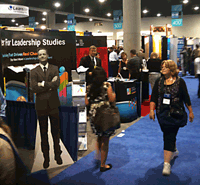 The reality is that most of the companies in the HR That Works range of 15-500 employees get very little play at this conference. There’s certainly plenty geared toward large organizations, and vendors have an incentive to focus there. Not a single vendor said that they focus on smaller employers.
Essential HR basics
- Hiring the right people
- Knowing how to make them productive
- Making sure that you can keep productive and trustworthy employees
- Training them to ratchet up their performance
- Getting them to play team ball
- Keeping your managers and employees from doing anything stupid that would get you sued
I came away from this convention ever more assured that we’re going down the right path by focusing on the needs of companies with 15 to 500 employees. For additional support, see Human Resource Consulting Services Insurance, or talk to an agent about your specific needs.
Frequently Asked Questions
Is a large HR conference useful for small-company HR practitioners?
Yes and no — conferences offer networking and exposure to trends, but many sessions and vendors target larger organizations, so small-company practitioners should pick sessions carefully.
What are affordable alternatives to attending a large conference?
Consider local HR workshops, online webinars, industry association chapters, and targeted short courses that focus on practical HR skills for small employers.
Which HR topics should small HR teams prioritize?
Small HR teams should focus on hiring, onboarding, basic performance management, legal compliance, and benefits administration that match their budget and growth plans.
How can a small company select vendors that fit its needs?
Look for vendors that explicitly serve small employers, request references from similar-sized companies, and compare costs and core feature sets before committing.