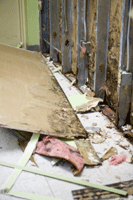
Overview
Mold can develop where moisture, poor ventilation, and organic materials intersect, often in hidden or little-used areas such as behind walls, in HVAC ducts, on support timbers, or in basements.
Exposure occurs when mold spores or fragments become airborne and are inhaled, contact the skin, or are ingested; some species trigger allergies while others produce mycotoxins that are associated with more serious symptoms in susceptible people.
Key takeaways
- Mold needs moisture and organic material to grow; fix the water source to prevent recurrence.
- Inspections of air and surfaces can find hidden growth before it becomes costly or hazardous.
- Insurance handling of mold claims varies; documentation and prompt remediation affect coverage outcomes.
How it works
Mold begins as microscopic spores that are naturally present in the environment and settle on surfaces. When those surfaces stay wet long enough and lack adequate airflow, spores can germinate and form visible colonies.
Remediation generally involves finding and repairing the moisture source, removing or cleaning contaminated materials, and improving drying and ventilation to prevent regrowth.
For guidance on how insurance considerations intersect with remediation and prevention efforts, see Mold Prevention and Insurance Implications.
What it may cover (and what it may not)
Policies differ: some policies provide limited coverage for mold remediation when it results from a covered peril (for example, certain sudden water losses), while others exclude mold or cap payouts for remediations and related losses.
Coverage is typically influenced by whether the insured maintained the property and took reasonable steps to prevent or correct known moisture problems.
For homeowner-focused prevention strategies and common claim scenarios, consult Protecting Your Home from Mold.
Common mistakes to avoid
Delaying detection and remediation is costly; slow response allows mold to spread into wall cavities, ductwork, and structural materials.
A second mistake is treating symptoms without fixing the source—simply cleaning visible mold without addressing leaks or humidity will likely lead to recurrence.
Failing to document damage, repairs, and communications with contractors or insurers can weaken your position if a claim becomes necessary.
Questions to ask an agent
Ask whether your policy limits or excludes mold and what criteria the insurer uses to determine coverage for remediation and health-related claims.
Request specifics about any required documentation, time frames for reporting losses, and whether preventive maintenance records affect claim outcomes.
Clarify whether additional endorsements or separate coverage options are recommended for properties with prior water damage or high humidity levels.
Next steps
Start with a visual inspection for signs of past or present water intrusion, musty odors, and visible mold, paying special attention to basements, crawl spaces, attics, and HVAC components.
If you suspect hidden growth, hire a qualified inspector or remediation professional to assess the scope, identify moisture sources, and recommend targeted repairs.
Keep detailed records of findings, repairs, and any professional reports, and if you need coverage reviewed or want to explore policy options, talk to an agent.
Frequently Asked Questions
How quickly does mold grow after water damage?
Mold can begin to grow within 24–48 hours on wet organic materials, so prompt drying and cleanup are important to limit spread.
Will bleach remove mold from porous materials?
Bleach may remove surface discoloration but often cannot penetrate porous materials; replacement or professional remediation is usually recommended for porous items.
Does homeowners insurance always cover mold damage?
Not always; coverage depends on the cause, policy language, and whether the mold resulted from a covered peril or from neglected maintenance.
When should I call a professional for mold?
Contact a qualified remediation professional if mold covers a large area, is in HVAC systems, or if occupants have health concerns; small, isolated patches may be managed safely with proper precautions.