Overview
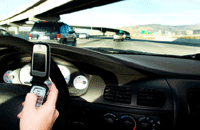
Several insurance-industry analyses have examined whether laws that prohibit texting while driving reduce crash rates. Those analyses generally compared collision claim patterns before and after states enacted bans and found little or no reduction in crash-related claims.
Some studies even reported small increases in collision claims after bans, suggesting that behavior changes or enforcement effects can offset any intended safety gains from a single-source ban on texting.
Key takeaways
- Banning texting alone has not consistently led to fewer crash claims in observational studies.
- Drivers may change how they use phones when laws are in place, which can unintentionally increase risk.
- Addressing distracted driving effectively usually requires broader measures than a single-source prohibition.
- Insurance claims data are one useful indicator but do not capture all safety outcomes or near-miss events.
How it works
Researchers typically track vehicle collision insurance claims for similar vehicle model years and compare claim frequency in a state that enacted a texting ban with nearby states that did not change their laws. This approach helps control for seasonal and regional driving differences.
Observed increases in some studies have prompted hypotheses such as drivers attempting to hide phone use from police, which can lengthen the time they look away from the road, or drivers shifting attention to other in-vehicle activities. For background on distraction types and how phone use affects driving, see Distracted Driving and Cell Phone Use.
For related insurance content, see Auto Show & Antique Car Show Insurance.
What it may cover (and what it may not)
Insurance policies still respond to crashes the same way regardless of a state texting ban: collision coverage pays for covered damage to your vehicle and liability coverage addresses damage or injury you cause to others. A law change does not automatically alter which damages are covered under a standard auto policy.
However, claim frequency and severity trends can influence broader insurance market behavior over time, such as underwriting decisions and premium rates in a region. Individual fault, driving history, and policy terms remain the primary determinants of coverage and claims outcomes.
Common mistakes to avoid
- Assuming a single law eliminates distracted driving — multiple distraction sources persist beyond texting.
- Thinking crash rates will immediately drop after a ban — behavioral and enforcement dynamics can delay or change effects.
- Believing insurance coverage changes automatically because of a law — coverage follows policy terms, not law alone.
- Overlooking other risk-reduction options like in-vehicle safety tech and driver education.
Questions to ask an agent
Does my policy include collision and liability coverage that protects me in crashes involving distracted driving?
Are there discounts, telematics programs, or safety features that could lower my premiums if I demonstrate safer phone use or reduced distracted-driving risk?
Next steps
If you want more detail on how distracted driving trends affect insurance, read about Auto Insurance and Distracted Driving or related topics such as Horse Shows Insurance, and consider practical steps to reduce risk, such as enabling "do not disturb" modes and using hands-free features when driving.
For help reviewing coverage or exploring options with an insurance provider, you can talk to an agent about how your policy applies to distracted-driving collisions.
Frequently Asked Questions
Do texting bans reduce crash rates?
Observational studies have not consistently found reductions in crash claims after texting bans; results vary by study and context.
Will my insurer deny a claim if I was texting and crashed?
Insurers evaluate claims based on policy terms and fault; laws against texting do not automatically change coverage decisions.
What can drivers do to lower distracted-driving risk?
Practical steps include silencing notifications, using a hands-free system properly, and programming navigation before driving.
Can safer-driving programs affect my insurance cost?
Yes; some insurers offer telematics or safe-driving discounts that may reduce premiums if you demonstrate safer behaviors.