Overview
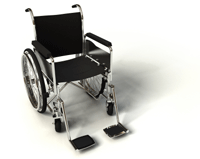 Small businesses that serve the public or employ workers must consider the Americans with Disabilities Act (ADA) when designing facilities, policies, and hiring practices. The ADA sets expectations for accessibility and reasonable accommodations so qualified individuals with disabilities can perform essential job functions and access goods and services.
Federal agencies publish plain-language guidance and illustrated checklists to help small firms understand requirements and available tax incentives. Reviewing those resources and aligning them with your insurance and risk-management plans reduces the chance of costly problems later.
Key takeaways
- Make a basic accessibility and policy review part of routine business maintenance.
- Reasonable accommodations are often practical, low-cost changes that enable employees to work safely and effectively.
- Tax credits or deductions may offset some accessibility expenses; check program rules before investing.
How it works
The ADA protects qualified individuals with disabilities who can perform essential job duties with or without reasonable accommodation. Employers should separate medical inquiries from job-related questions, engage in an interactive accommodation process when needed, and document decisions and alternatives considered.
Access for customers typically focuses on removing physical barriers, providing alternative communication formats, and ensuring staff know how to assist patrons with disabilities. Practical steps include evaluating entrances, service counters, signage, and digital accessibility for online services.
What it may cover (and what it may not)
Coverage generally includes physical modifications (ramps, door hardware), changes to work schedules, or auxiliary aids such as assistive software and equipment. Small businesses may also qualify for modest tax incentives to help cover eligible costs.
The ADA does not require changes that create an undue hardship—meaning significant difficulty or expense relative to the size and resources of the business—or modifications that fundamentally alter the nature of a program or service. Safety requirements may limit some accommodations where risk cannot be mitigated.
Common mistakes to avoid
Avoid assuming all accommodations are costly; many are inexpensive adjustments or schedule changes. Treat accommodation requests seriously and avoid blanket policies that deny requests without an individualized assessment.
Do not ask job applicants broad medical questions or make hiring decisions based on stereotypes. Instead, focus on whether the applicant can perform essential job functions and whether reasonable accommodations would enable that performance.
Questions to ask an agent
Ask how your liability and property policies respond to ADA-related claims and whether coverage can be adjusted to include accessibility improvements. Discuss policy exclusions and any endorsements that address employment practices or premises liability.
Consider asking whether your insurer can help match specific accommodation plans with appropriate coverage for equipment, property changes, or workplace safety upgrades.
Next steps
Begin with a simple walkthrough of your facility and a review of hiring and customer-service policies to identify obvious barriers. Use published guidance for small businesses as a checklist when planning changes.
For insurance considerations related to storefronts and accessibility, see Safety Regulations Insurance.
For perspectives that link workplace accommodations to insurance needs, see Understanding Reasonable Accommodations and Workplace Safety.
If you need additional insurance resources related to specialized operations, consider reviewing Runabouts Insurance for examples of how coverage varies by activity and exposure.
If you want to confirm your coverage or discuss specific adjustments, talk to an agent who can help align insurance limits and endorsements with your accessibility and accommodation plans.