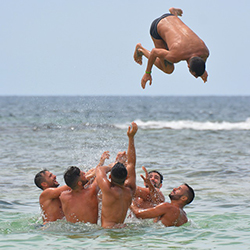
In recent years, team building has gained a foothold in corporate America as a fun and effective management tool. To succeed in the business world, employees must be able to plan and execute programs as a team, communicate clearly, use resources efficiently, and adapt to changing circumstances.
Team-building activities are designed to develop those skills in a low-stakes, often enjoyable environment. They can encourage out‑of‑the‑box thinking and improve group dynamics by breaking down barriers that prevent effective collaboration.
Well-designed exercises foster decision-making, challenge resolution, and leadership skills. Some activities encourage participants to trust one another with their safety or to experience the exhilaration of overcoming a physical challenge, which can return employees to work with renewed energy and a willingness to collaborate.
However, activities that include risky physical elements can create significant liability and workers' compensation exposure. Companies should carefully evaluate the hazards of an activity and the physical capabilities of employees before proceeding.
Consultants hired to design programs should understand your expectations and constraints and follow your safety requirements. For more guidance on aligning team activities with broader workplace considerations, see Building Security, Workplace Trust, BIM & Team Building.
Some activities—white water rafting, rock climbing, paintball, or firewalking—may not be suitable for all employees. Beyond physical danger, planners should consider whether an activity could embarrass or exclude staff; for example, events that require wearing swimwear may make some people uncomfortable and reduce participation.
To promote safe team building:
- Include team-building activities in your organization's formal risk management program so they are evaluated alongside other workplace risks.
- Emphasize that employees should exercise caution both on the job and during any physical team-building exercise.
- Define your needs and safety expectations clearly to any outside consultants hired to design the program.
- Ensure all activities are properly supervised by trained staff or qualified contractors, and stop any activity immediately if an unsafe situation is observed.
When planning events, consider alternatives that encourage collaboration without significant physical risk so everyone can participate. For information about team-based coverage considerations for groups and activities, see Teamwork, Workplace Safety and Cybersecurity.
If you need help reviewing insurance implications for an event or would like a cost estimate, talk to an agent.
Frequently Asked Questions
What steps should employers take before running a high-risk activity?
Assess participant fitness and consent, vet vendors and instructors, require appropriate safety equipment, and document approvals and emergency plans.
Can an employer be held responsible if an employee is injured during a team-building exercise?
Employers can face workers' compensation claims and possible liability if an activity is required by the company and safety precautions were inadequate.
How can activities be inclusive for all employees?
Offer a mix of activities that vary in physical intensity, avoid mandatory participation in risky events, and provide alternatives that focus on communication and problem-solving.
Should companies require waivers for team-building events?
Waivers may be appropriate for some activities, but they do not eliminate all legal exposure; consult your insurance advisor and document safety measures.