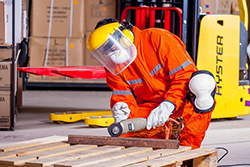
 Employees who work in construction, carpentry, manufacturing, auto repair, welding and maintenance are most likely to experience eye injuries.
However, almost every work environment contains eye hazards, and the Centers for Disease Control and Prevention reports that 2,000 people suffer from workplace eye injuries every day. As many as 400 of those accidents cause vision loss. The correct eye protection can prevent up to 90 percent of these accidents.
Common Causes of Workplace Eye Injuries
- Chemicals and cleaning products
- Tools
- Flying metal, glass, pencils, nails, staples, wood slivers and other objects
- Particles
- Harmful radiation
If your workplace handles chemicals or hazardous materials, review operations and risk controls and consider specialized coverage such as Hazardous Material and Hazardous Waste Hauling Insurance Program for guidance on managing those exposures.
How do Eye Injuries Happen?
- Penetration occurs when a sharp object enters the eye and causes trauma.
- Burns damage the tissue in and around the eye. They are caused by chemicals or cleaning products and include thermal burns from welding.
- Striking or scraping involves small particles or objects and is the most common workplace eye injury. The offending material can affect the eye, eyeball or socket.
Auto repair and welding workplaces should evaluate both safety controls and insurance options, including industry-specific coverages such as Hazard II Garage Insurance.
Ways to Prevent Eye Injuries
Perform an eye hazard assessment. Walk around your business and identify any workstations, objects or other potential hazards.
Eliminate as many hazards as possible. Work with your safety manager or insurance company to identify and remove the hazards you find.
Install safety measures. Consider screens, machine guarding or engineering controls as well as other necessary safety precautions.
Teach eye safety to your employees. Your team members should understand the potential dangers they may face on the job and the protective measures they should take.
Provide proper eye safety gear. The gear you provide depends on your specific workplace hazards and on your employees’ personal preferences and needs. Examples include prescription and non-prescription safety glasses, side shields, goggles, face shields, helmets and full-face respirators. Be sure the safety lenses meet OSHA requirements, are comfortable and allow peripheral vision.
Train team members on how to handle an eye injury emergency. Everyone should know where the eye wash station is located and how to use it.
Continue to take eye safety seriously. Perform regular hazard assessments, update safety equipment and provide ongoing eye safety training.
Update your Workers’ Compensation insurance. While you do your best to ensure workplace safety, accidents can happen. Your Workers’ Compensation insurance will pay for medical treatment and other related expenses if an employee suffers an eye injury on the job.
If your operations generate waste or non-hazardous byproducts, review risk controls and insurance options such as Non-Hazardous Waste Disposal Insurance to help manage disposal-related exposures, and always talk to an agent about coverage needs.
Workplace eye safety is important. Use these top safety tips to prevent as many eye injuries as possible.
Frequently Asked Questions
How common are workplace eye injuries?
They are relatively common; thousands occur each year and many are preventable with proper protection and controls.
What should I do immediately if a chemical splashes into an eye?
Flush the eye with clean water for at least 15 minutes and seek emergency medical care right away.
Are safety glasses enough for all jobs?
Safety glasses protect against many risks, but goggles, face shields or respirators may be required for chemical splashes, fine particles or harmful radiation.
Will Workers’ Compensation cover on-the-job eye injuries?
In many cases, Workers’ Compensation covers medical treatment for work-related eye injuries; check with your insurer or agent for specifics.