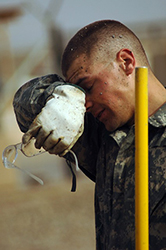
Although the body naturally cools itself, continuous exposure to extreme heat can overwhelm those mechanisms and cause illness or death.
The following are four types of heat-related ailments listed in order of severity (four being the most severe). Even a less severe condition can become more serious unless it is treated early.
Heat Cramps - Painful muscle spasms in the arms, legs, or abdomen, often with dizziness, weakness, and profuse sweating. Cramps commonly occur after prolonged exertion and are caused by loss of sodium through sweating; slightly increasing daily sodium intake during prolonged hot-weather activity can help prevent them.
Heat Syncope - Fainting that occurs when the body diverts blood from the brain to the skin to dissipate heat.
Heat Exhaustion - Extreme fatigue with muscle aches, nausea, and fever. Additional symptoms can include clammy skin, diarrhea, rapid pulse, vomiting, and weakness.
Heat Stroke - Failure of the body’s temperature control systems. Symptoms may include disorientation, agitation, rapid breathing, racing pulse, lethargy, convulsions, and loss of consciousness. Body temperature can rise to extremely high levels and requires immediate medical attention.
Helping a victim of heat-related illness
- Take the person out of the heat.
- Loosen their clothing.
- Apply cool, wet cloths (not freezing or cold) or soak the victim’s clothing with water.
- Elevate the feet eight to 10 inches.
- If the person is conscious and not vomiting, offer plenty of fluids.
Preventing heat-related illness
- Wear loose-fitting, lightweight, light-colored clothing.
- Use sunscreen to prevent sunburn, which can hinder the skin’s ability to cool itself.
- Wear a hat that provides shade and allows ventilation.
- Limit vigorous activity during hot, humid weather.
- Drink plenty of water before, during, and after exercise; drinks with sugar or caffeine can worsen dehydration, and alcohol increases fluid loss.
- Avoid hot, confined places. If you must work there, rotate tasks so people can rest in a cooler area periodically.
- Electric fans may provide comfort but cannot prevent heat-related illness when temperatures are very high.
- Some prescription and over-the-counter drugs can interfere with temperature regulation; discuss medications with your doctor and take extra precautions if needed.
If you manage facilities or events that expose people to heat, review relevant insurance and safety guidance such as Summer Camps with Horseback Riding Insurance to ensure appropriate coverage and risk controls are in place.
Employers and venue operators should also consider industry-specific protections; for more information, see Theaters Insurance.
At the first sign of heat illness—cramps, nausea, dizziness, or severe headache—move away from the heat, rest in a cool spot, and get fresh air. If you are unsure about the next steps, talk to an agent for guidance on workplace protections and coverage.
Remember that prevention is easier than treatment, and always seek immediate medical help for severe or worsening symptoms.
Frequently Asked Questions
How can I tell the difference between heat exhaustion and heat stroke?
Heat exhaustion often includes heavy sweating, weakness, and nausea, while heat stroke involves confusion, loss of consciousness, and very high body temperature and requires emergency medical care.
What should I give someone who is having heat cramps?
Move them to a cool place, loosen clothing, give water if they are conscious, and consider a sports drink or salty snack if cramps are from sodium loss.
Are electric fans safe during extreme heat?
Fans can provide comfort but may not prevent heat-related illness when temperatures are extremely high; seek cooler spaces and hydration instead.
When should I call 911 for a heat-related problem?
Call emergency services if the person is disoriented, unresponsive, convulsing, or has a very high body temperature; these may be signs of heat stroke.