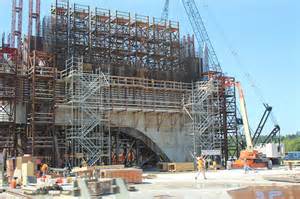
A company owns property and has decided to build a condominium on the site.
It has completed all the paperwork and has all the permits needed to begin construction and is ready to finish the contract with a general contractor (GC).
Additional Insured Protection - General Contractor's Commercial Liability Insurance
The project owner, called CCC (Condo Construction Company), wants more protection than an additional insured endorsement typically provides.
On their last project they ran into a problem caused by inadequate protection under the additional insured form of coverage.
CCC failed to tell the GC about an abandoned well on the site. When a worker fell into the concealed well he suffered a broken ankle, and CCC was found negligent for failing to inform the GC.
The ruling found that the GC had no liability, even partly, for the injury to their own employee.
CCC also discovered that the hold harmless and indemnity clauses in the contract could not be enforced in the state where the project was located because state law prohibits indemnification of another party’s negligence in a construction contract.
After these setbacks, CCC lost confidence in relying on additional insured status plus contractual indemnity.
Owners & Contractors Protective Liability Insurance (OCP)
To give CCC more protection, the GC offered to buy OCP insurance listing CCC as the named insured.
CCC’s insurance advisor advised against relying solely on an OCP form because it can include coverage restrictions and exclusions that leave gaps for owners.
After a lengthy conference, CCC decided that a different form of insurance would be more appropriate for the risks on this project.
Owner's Interest Liability — Project Specific CGL Insurance (Owner's Interest)
An Owner’s Interest policy provides broader protection than an OCP policy or typical CGL endorsements combined with contractual hold harmless and indemnity language.
This type of project-specific commercial general liability policy is designed to cover owner exposures that other forms may not fully protect.
In addition to incidents during construction, an Owner’s Interest policy can extend coverage to losses that occur after the project ends.
For example, the policy can protect CCC if a balcony collapses after the GC completes the project and has left the site.
When the GC learns about the benefits of an Owner’s Interest policy, the insurer will often include the GC as a named insured so the contractor also has coverage for the extended time period.
For background on contractor-focused liability and coverages, owners and GCs can review information about Insurance for General Contractors, see Boiler Installation and Repair General Liability Insurance, and consider construction-specific policies such as Installation Floater (Installation Builders Risk Insurance) and Sidewalk Lift Inspectors Builders Risk.
Endorsements to a CGL or OCP and careful contract language help, but an Owner’s Interest policy closes gaps left by older approaches.
The value of any policy depends on the risks it actually covers, and owners who do not assume some self-protection may face higher costs later.
Project owners and general contractors should discuss coverage options with their insurance advisor before signing the next construction contract; alternatively, you can talk to an agent to review available options.
Frequently Asked Questions
What is the difference between an additional insured endorsement and an Owner's Interest policy?
An additional insured endorsement extends an existing policy’s coverage to another party for specific liability, while an Owner's Interest policy is a project-specific CGL written to protect the owner’s exposures and can fill gaps left by endorsements.
Can a GC buy insurance that fully protects the project owner?
A GC can purchase some policies that name the owner, but not all forms provide equivalent protection; owners often buy their own Owner's Interest policy to ensure broader, project-specific coverage.
Do indemnity clauses always protect an owner?
Not always—many states limit or prohibit contractual indemnification for another party’s negligence, so indemnity clauses may be unenforceable depending on jurisdiction.
Should coverage extend beyond construction completion?
Yes—post-completion exposures like latent defects or structural failures can occur later, and some Owner's Interest policies or extended endorsements provide that protection.