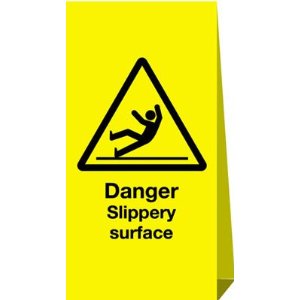
Overview
Slips, trips, and falls are a leading cause of workplace injuries and can result in significant lost time, medical costs, and, in severe cases, fatalities.
These incidents happen in virtually every work setting: wet floors, icy walkways, uneven sidewalks, cluttered storage areas, and elevated work surfaces all present hazards if not controlled.
Reducing these incidents relies on a combination of good maintenance, proper personal protective equipment, safe work practices, and employee training.
Key takeaways
- Housekeeping and prompt spill cleanup prevent many slip-and-fall incidents.
- Fall protection and safe ladder use reduce injuries from elevated work.
- Training and hazard awareness are cost-effective ways to lower risk.
- Regular inspections and maintenance address trip hazards like uneven pavement.
How it works
Most slip-and-fall incidents begin with a hazard: a wet surface, loose flooring, poor lighting, or obstacles in walkways.
When a hazard exists, the chain that leads to an injury includes exposure, lack of control measures, and insufficient training or supervision.
For practical workplace guidance on controls, ventilation, lifting, and fall prevention, see Workplace Safety: Ventilation, Lifting & Slip/Trip/Fall Prevention.
For program-specific guidance, see Moving and Storage Program (Local).
What it may cover (and what it may not)
Insurance responses vary by policy: workers' compensation typically covers employee injuries on the job, while commercial general liability can address third-party claims for bodily injury on premises you control.
Property damage from a fall (for example, damage to fixtures) may be covered under a business property policy, but intentional acts and injuries outside the scope of work are generally excluded.
Employers looking to combine risk management with training and safety programs can find useful perspectives in industry guidance such as Trends in Risk Management and Safety Training for SMBs.
For a related industry resource, see Insurance for Automotive Exhaust Repair Shops.
Common mistakes to avoid
- Allowing spills to remain on floors instead of cleaning them immediately.
- Using makeshift platforms (like wheeled chairs) instead of proper ladders or step stools.
- Failing to secure cords, rugs, or materials that cross walkways.
- Not providing fall protection or failing to enforce harness and tie-off use when required.
- Neglecting routine inspection and maintenance of stairs, railings, and parking areas.
Questions to ask an agent
Ask whether your current policies cover employee injuries from slips and falls and whether there are recommended endorsements or programs to reduce exposure.
Request examples of loss-control services your insurer provides, such as training modules, inspection checklists, or on-site consultations.
For guidance on property-specific hazards and coverage options, consider resources like Strip Centers Insurance that discuss premises exposures and mitigation.
Next steps
Walk the workplace regularly to spot wet areas, uneven walking surfaces, poor lighting, and cluttered aisles, and fix hazards promptly.
Train employees in ladder safety, proper lifting and carrying techniques, and how to report and respond to spills and trip hazards.
If you want a quick way to review coverage options or obtain a policy comparison, talk to an agent to discuss your specific needs and loss-control resources.