Overview
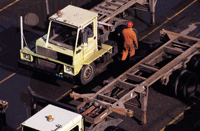
An accident or breakdown in a company vehicle can reduce productivity and harm your company's reputation when deliveries are late or appointments are missed.
Consistent preventive maintenance, driven by drivers and supported by maintenance staff, is the simplest way to reduce breakdowns and accidents.
Key takeaways
- Daily inspections catch small problems before they become disabling failures.
- Drivers are the first line of defense and should report irregularities immediately.
- Documenting issues and driving conditions helps maintenance prioritize repairs.
- Linking maintenance practices to safety and liability programs reduces risk exposure.
How it works
Preventive maintenance complements scheduled services like oil changes and tune-ups by addressing issues discovered between service intervals.
Drivers complete a short pre-drive inspection and report any abnormalities to the maintenance team so repairs can be scheduled before a failure occurs.
For practical checklists and resources to help standardize inspections across a fleet, consult Fleet Maintenance and Safety Tips for guidance you can adapt to your operations.
For building-focused operations and janitorial fleets, see Building Maintenance & Cleaning Services Insurance for related guidance.
What it may cover (and what it may not)
- Brake system condition (service, parking, emergency, trailer brakes).
- Wheels, tires, and rims for integrity and proper inflation.
- Lighting and signaling: headlights, brake lights, turn signals, reverse lights, and alarms.
- Visibility items: windshield, wipers, mirrors, dashboards, and reflectors.
- Engine and exhaust behavior, including idling and unusual noises or smells.
- Presence and condition of a safety kit (flares, reflectors, first aid supplies, fire extinguisher, basic tools).
Preventive checks typically cover mechanical systems, lighting, visibility, and on-board safety equipment.
Preventive checks do not replace scheduled professional inspections or major repairs that require certified technicians.
Common mistakes to avoid
Waiting to report minor issues until a scheduled service date can allow a small fault to become a breakdown on the road.
Failing to document observations and driving context makes it harder for maintenance staff to reproduce intermittent problems.
Neglecting safety kit upkeep reduces effectiveness during an emergency, so inventory and cleanliness should be part of the routine.
Questions to ask an agent
When evaluating fleet risk and insurance needs, ask whether your policy rewards documented preventive maintenance and driver reporting programs.
Ask about coverage limits for vehicle downtime, replacement vehicles, and liability related to vehicle operations.
If you want guidance tying maintenance to claims reduction and workers' compensation exposure, see Reducing Liability and Workers Compensation Claims Through Proper Maintenance.
Also consider cyber risks tied to maintenance operations; review Maintenance Cyber Liability where appropriate.
If you need a high-level explanation of why regular maintenance matters for long-term fleet costs, review The Importance of Fleet Maintenance.
If you prefer to discuss options with a representative, talk to an agent who can explain how preventive programs affect coverage and premiums.
Next steps
Create a short, standardized pre-drive checklist for each vehicle type and make it easy for drivers to report issues immediately.
Train drivers to document what they see and any unusual driving conditions, and set expectations for response times from maintenance staff.
Monitor repair trends and adjust preventive tasks or training to reduce repeat problems and improve uptime.
Frequently Asked Questions
How long should a daily pre-drive checklist take?
A typical pre-drive check should take 3–7 minutes per vehicle depending on complexity and the number of inspection points.
What if a driver notices a problem while on the road?
Report the issue to maintenance immediately, document signs and conditions, and follow company protocols for safe parking or repair.
Should preventive maintenance tasks be different for light and heavy vehicles?
Yes, tailor checklists to the vehicle type and industry requirements while keeping core items consistent across the fleet.
Does preventive maintenance reduce insurance claims?
Consistent preventive maintenance lowers the likelihood of accidents and breakdowns, which can reduce frequency and severity of claims.