Overview
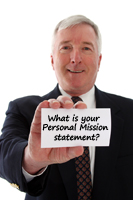
A personal mission statement helps you align daily work with a larger purpose, and when that personal purpose meshes with an organization's mission it guides decisions and priorities.
For many businesses, the customer or client experience is the clearest expression of that shared purpose: products and services change, but the experience people remember defines a brand.
Key takeaways
- Personal and corporate mission statements should be complementary and used as decision filters.
- Focusing on customer experience creates consistent priorities across roles and teams.
- Documenting vision, mission and goals helps recruit and align others to your purpose.
How it works
Create a short, clear personal mission statement that states who you serve, how you help, and what you value in the work.
Use that statement to evaluate projects and strategies: if an action doesn't support your mission or the company's mission, reconsider it.
If you work in or advise HR, consider industry-specific guidance such as Human Resource Consulting Services Insurance to understand how risk management and service design intersect with your people strategy.
What it may cover (and what it may not)
A mission-focused approach typically covers priorities like employee development, customer experience standards, and consistent hiring practices.
It does not replace operational plans or budgets; it informs them by clarifying which initiatives deserve investment and which do not.
For resources on shaping both personal and workplace mission language, see Understanding Personal and Workplace Mission Statements.
Common mistakes to avoid
Don’t write a mission that is vague or impossible to measure; keep it specific enough to guide choices.
Avoid treating the mission as decoration—publish it, discuss it in meetings, and use it as a decision checkpoint.
Don't isolate your mission from stakeholders: successful mission statements require input and buy-in from the people who must live them daily.
Questions to ask an agent
How will proposed policies or programs reinforce the customer experience our mission emphasizes?
Which HR or risk-management changes would most directly support the mission and measurable goals?
What documentation or tools can help communicate the mission to new hires and partners?
Next steps
Draft a one- to two-sentence personal mission statement and test it against current projects to see which efforts align and which do not.
Share the draft with a trusted colleague or your HR lead, and iterate based on feedback so it reflects both personal values and organizational priorities.
If you want to align mission language with coverage or policies, review options like Mission Statement Coverage, and when you need a formal review, consider asking your broker or talk to an agent.
Frequently Asked Questions
Why write a personal mission statement?
It clarifies priorities, helps you make consistent decisions, and makes it easier to communicate your professional purpose to others.
How long should a mission statement be?
Keep it concise—typically one to two sentences—so it is easy to remember and use as a decision filter.
Who should see my personal mission statement?
Share it with supervisors, teammates, and mentors so they can support and align opportunities with your stated purpose.
Can a mission statement change?
Yes; revisit it periodically as responsibilities or career goals evolve and update it to remain relevant.