 Some people believe things happen to them, while others believe things happen because of them. Sometimes, people fluctuate between the two extremes.
CSRs need to have both a receptive and a take-charge personality. It's possible to make modifications in behavior-to focus on anticipating problems rather than sitting back and reacting after things have happened. If, on the other hand, you jump into a situation too quickly before listening carefully, it's possible to concentrate on learning to be more receptive.
Are you proactive or reactive? Each chapter in the following 'Autobiography' represents an attitude. Which chapter or attitude best represents your state of mind?
Chapter 1
I walk down the street.
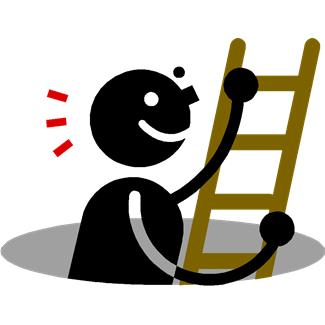
There is a deep hole in the sidewalk.
I fall in.
I am lost . . . I am helpless.
It isn't my fault.
It takes forever to find a way out.
Chapter 2
I walk down the same street.
There is a deep hole in the sidewalk.
I pretend I don't see it,
I fall in, again.
I can't believe I am in this same place.
But it isn't my fault.
It still takes a long time to get out.
Chapter 3
I walk down the same street.
There is a deep hole in the sidewalk.
I see it is there.
I fall in . . . it's a habit . . . but my eyes are open.
I know where I am.
It is my fault.
I get out immediately.
Chapter 4
I walk down the same street.
There is a deep hole in the sidewalk.
I walk around it.
Chapter 5
I walk down a different street.
Chapter 6
I prefer to walk down the old street.
I go back and fix the hole.
Gauge your attitude toward problem-solving. Is it time for an adjustment? Recognizing behavioral tendencies is the first step to changing your approach to problems. Are you a solver? An avoider? Oblivious to problems altogether? Now is the time to adopt effective problem-solving strategies.