While doing some spring-cleaning in my office recently, I found a few boxes of old computer hardware and software.
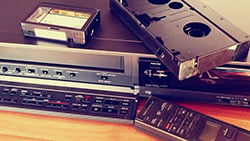
Like many of you who have a closet in your agency where you stuff things that you can’t bring yourself to throw out, my boxes are filled with old equipment that once was very important. Many of the items are various types and brands of backup devices. That got me thinking about how agencies need to archive information so that it can be retrieved.
Let me give you a few examples. I used to use an Iomega Zip drive with 100 MB and 250 MB Zip disks for backup. But I can’t pull a file off one of those old disks now. In the last agency I worked for, the original software we used to store our scanned documents was called PageKeeper.
This program stored scanned images in a proprietary format that required the program in order to view any documents. However, the company that made the program stopped updating it. What happens to those images if the agency needs to retrieve them now?
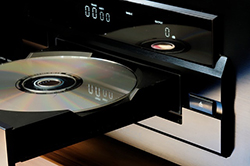
In truth, all media eventually becomes obsolete; it just seems that some die faster than others. What’s going to happen to the CD-ROMs and the DVD-Rs that we’re using to archive our precious data, such as our digital photos? Are they doomed? Will they become useless (except as coasters)?
This is an issue that every agency should address as part of their electronic document management process. Here are some ideas to help you stay ahead of the storage curve:
- Avoid proprietary storage media
Iomega’s proprietary storage solutions offer one example of how dangerous they can be. Each new technology (Bernoulli, Jaz, Zip, Rev) has a good combination of speed, capacity, and low cost going for it — together with one huge downside: Your next computer is unlikely to support the format. These proprietary formats work acceptably for day-to-day backup, but they’re absolute death for long-term storage of important files.
- Stick with standards
You’ll save yourself time, money, and aggravation if you choose storage media that have broad industry support and are sold and manufactured by more than one vendor. 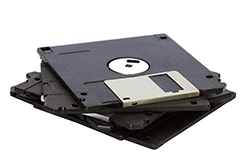 Although no format lasts forever — even DVDs will someday be obsolete — the more vendors that support the format, the less likely you are to find yourself hanging onto a nice, round, shiny thing that has your document, but won’t let you get to it.
- Skip removable media altogether
Here’s a thought: Consider removable media simply as a convenience for transporting data, not a place to store your data over the long term. Hard disk storage is incredibly cheap, and it’s getting cheaper. Online backup services are also a viable option. My personal data backup is performed automatically for me to a secure off-site storage facility from which I can retrieve the data at any time. The growth of broadband networks is making the act of transporting files (except movies, for now) by disk cumbersome at best.
Storing important documents for later retrieval is vital! As you move to an electronic document environment, be sure that you have a plan for media obsolescence.