Overview
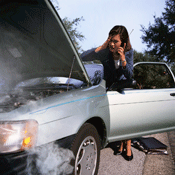 A vehicle breakdown can happen at any time and in many places — on a busy highway, a dark rural road, or far from home. Preparing ahead reduces risk, limits exposure to roadside hazards, and helps get you back on the road faster.
This guide explains practical steps to prepare for and respond to a breakdown, what to carry, and how to protect yourself and passengers until professional help arrives.
Key takeaways
- Always carry a basic emergency kit with lighting, signaling, first aid, and tools.
- If you break down, move off the road, warn other drivers, and stay safe inside the vehicle when appropriate.
- Use official services (roadside assistance, police) rather than accepting repair work from strangers.
How it works
Start by assembling a compact emergency kit you can keep in the trunk or cargo area. At minimum it should include a working flashlight with spare batteries, flares or reflective triangles, a distress sign or high-visibility vest, a basic first-aid kit, and simple tools such as pliers and a tire pressure gauge.
Before you leave, fully charge your cell phone and carry a backup charger. If you frequently travel in areas with weak cellular coverage, plan for alternatives such as a calling card or notifying someone of your route and expected arrival time.
When a breakdown occurs, try to move the vehicle completely off the travel lanes and onto the right shoulder or into a paved turnout. Activate hazard lights immediately and place warning devices behind the vehicle at a safe distance to alert oncoming traffic.
What it may cover (and what it may not)
Roadside assistance plans typically cover services such as towing, battery jump-starts, flat-tire changes, fuel delivery, and lockout service, depending on the provider and level of service you purchase.
Routine vehicle maintenance and long-term repairs are not covered by roadside assistance; those require a mechanic or warranty coverage. For general guidance about vehicle maintenance and avoiding roadside failures, see Vehicle Ownership and Maintenance Tips. For coverage options related to restoration projects, see Vehicle Restoration Insurance.
Common mistakes to avoid
Avoid attempting risky repairs on a busy road or in poor visibility. Many authorities advise against changing a tire or working under the hood when traffic is present; instead, move well off the roadway before exiting the vehicle.
Do not accept offers from strangers who approach to repair your vehicle. If someone wants to help, ask them only to call your roadside assistance provider or the police and wait for trained help to arrive.
Questions to ask an agent
When reviewing coverages, ask whether your policy or roadside plan includes towing distance limits, battery service, and on-site labor charges. If you want context on how insurance and safety intersect with newer vehicle types, consider reading Navigating Insurance and Safety in Modern Transportation.
Also ask about any exclusions, waiting periods, or service area limits so you know what to expect during a breakdown. For information on driver records and vehicle safety that can affect coverage, see Understanding MVRs and Vehicle Safety.
Next steps
Create or buy an emergency kit and store it where it’s easy to reach. Add routine checks to your travel routine: charge your phone, verify tire pressure, and keep basic contact numbers accessible.
If you want to review options or add roadside coverage, schedule time to talk with your insurance representative and, if needed, talk to an agent. If you own a specialty or kit vehicle, consider reviewing Kit Car Insurance.
Frequently Asked Questions
What should be in a basic roadside emergency kit?
Include a flashlight with spare batteries, flares or reflective triangles, a high-visibility vest, a first-aid kit, basic tools, and jumper cables or a portable battery charger.
Is it safer to stay in my vehicle after a breakdown?
If you are on a high-speed road or visibility is poor, it is usually safer to stay inside with your seat belt fastened and call for help, unless you can move to a safe area away from traffic.
Should I accept help from a stranger who offers roadside assistance?
Politely decline hands-on assistance and ask the person to call your roadside service provider or the police to arrange professional help.
How far behind the vehicle should I place warning devices?
Place flares or reflective triangles at increasing distances behind the vehicle so approaching drivers have time to react; consult your local guidelines for specific distances when possible.