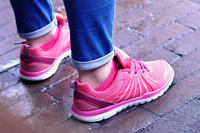
Exercise walking is enjoyable and provides numerous health benefits, but like all exercise it requires the right equipment. Wear the wrong shoes and you can end up with sore feet or an injury. Take your time and invest in shoes that match your feet and your needs.
Advantages of the Right Walking Shoes
Before you buy walking shoes, examine them and try them on. Look for stability, flexibility and comfort to prepare for safe workouts.
The right shoes give you balance and help correct your foot's natural inward roll (pronation) or outward roll (supination). They also help you maintain proper posture and protect your spine, back and muscles.
Four Main Components of a Good Walking Shoe
- Heel counter - The area of the shoe under your Achilles tendon should be snug and cup the back of your heel to prevent pronation or supination.
- Midsole - The area between the shoe's tread and its upper should provide cushioning, support and flexibility. This component is the most important one.
- Insole - The area of the shoe where your foot's sole contacts the shoe should be contoured to match your foot. It reduces shear forces and provides shock absorption.
- Toe box - The area surrounding your toes should be roomy enough for them to move and bend without restriction but not so roomy that your foot shifts. Ideally, select shoes with at least one-half to one full thumb's width between your longest toe and the end of the shoe.
How to Try On Walking Shoes
After you find a pair you like, try them on. Make sure they fit right and feel comfortable.
Ask the salesperson to measure both feet while you stand, since feet expand under weight. Visit the store at the end of the day, too, when feet are naturally slightly larger.
Wear the socks you plan to use for walking and try on both shoes. Lace them completely, stand up and walk around to check the fit and comfort.
Never buy walking shoes that are too tight. Most shoes need a short break-in period, but shoes that are too tight won't stretch. If you use arch supports or orthotics, wear them when trying shoes so you can confirm the fit with your inserts.
If you walk dogs professionally and need coverage tailored to that work, consider Pet Walking Insurance to learn more about options for on-the-job exposures.
For people whose jobs require long hours on their feet, such as skilled trades, you may also review resources like Millwrights insurance to understand workplace-related protections and requirements.
If you're uncertain which shoe features are most important for your foot type or activity level, ask an agent for guidance.
Frequently Asked Questions
How can I tell if a shoe provides enough arch support?
Try the shoe on with the socks and any orthotic you use; the midsole and insole should feel supportive under your arch without causing pressure points.
When should I replace walking shoes?
Replace walking shoes when cushioning and tread show significant wear or if you begin to feel new aches; commonly this is every 300–500 miles depending on use and build.
Is a roomy toe box really necessary?
Yes — a slightly roomy toe box lets your toes splay naturally and reduces the risk of blisters or nail problems during longer walks.
Can I use running shoes for walking?
Many running shoes work for walking, but choose one with appropriate stability and a firmer heel counter to suit walking mechanics.