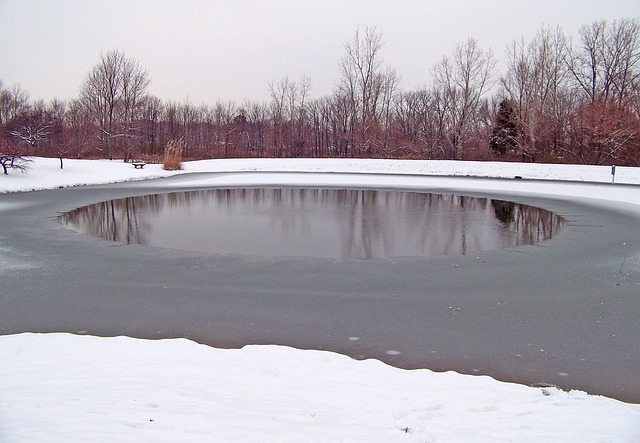
Outdoor play on icy ponds can be fun for kids of all ages when you ice skate, play ice hockey, or slip and slide for fun. March temperatures often fluctuate, though, and ice that looks solid may not be safe. Take precautions and follow these safety tips.
Test the Ice's Thickness
Even if a pond appears frozen, the ice should be at least four inches thick to support a person. To test thickness, make a small hole with a chisel or auger and insert a tape measure into the hole.
Because ice freezes unevenly, make at least one hole every 150 feet to check that the entire area is covered with enough solid ice. New clear ice is stronger than old or snow-covered ice, and clear ice is roughly twice as strong as white or slushy ice.
If the surface is white or snow-covered, the ice should be at least eight inches thick before you walk or play on it.
Dress Appropriately
Wear layers for winter outdoor activities: a moisture-wicking base layer, an insulating middle layer, and a weatherproof outer layer. Use shoes or boots with good traction and wear a helmet to protect your head while skating or playing hockey.
If you operate a rental or retail shop for skates or winter gear, consider business coverage details and resources such as Bicycle Accessories Suppliers Insurance for related supplier concerns.
Take a Buddy
Playing on ice is dangerous even when it seems thick enough, so never go alone. Stay within about 10 feet of your partner so you can assist each other quickly if someone breaks through.
What to do if You Fall Through the Ice
Even with precautions, you or someone else may fall through. Knowing how to respond improves the chance of surviving until help arrives.
- Stay calm. Panic uses energy and can make it harder to find the broken edge. Control your breathing and move deliberately toward solid ice.
- Use safety tools. A whistle can signal for help, and ice picks or screwdrivers can give you purchase to pull yourself up.
- Don't stand up immediately. Lying on your stomach or side spreads your weight. Kick and pull yourself onto better ice, then roll away from the hole until you reach firmer ground.
If you manage a rink or organized skating event, additional operational guidance is available for facility managers at Ice Rink Insurance: Guide for Arena Managers.
Playing on winter ice can be enjoyable when you follow these safety steps. If you have questions about coverage or risks, talk to an agent who can review your situation.
Frequently Asked Questions
How thick does ice need to be for skating?
As a general guideline, clear ice should be at least four inches thick to support a person, while white or snow-covered ice should be thicker—about eight inches—before walking on it.
How can I safely test ice thickness?
Use a chisel or auger to make a small hole and measure the ice with a tape measure, testing at intervals across the area because thickness can vary.
What should I do if someone falls through the ice?
Call for help, try to keep the person calm, and use a pole, rope, or other aid from a safe position to pull them out without getting closer to the fragile edge.
Is wearing a helmet necessary for ice play?
Yes—helmets reduce the risk of head injury during falls while skating or playing hockey and are recommended for all ages.