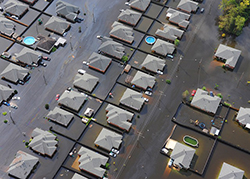
Don’t wait until the weather forecast calls for prolonged heavy rains before buying flood insurance. While flood insurance can be purchased at any time, most policies include a waiting period before they take effect, commonly 30 days. Flooding is one of the most common natural disasters and can cause severe damage to homes and personal property, so separate coverage is often necessary because standard homeowners policies usually do not cover flood loss.
If you are in a high-risk flood zone, a federally regulated lender will typically require flood insurance as a condition of a mortgage. To satisfy the lender, the policy should be purchased in an amount that adequately protects the loan balance and the structure.
Homeowners should also consider flood coverage if they live in a flood plain without robust flood controls such as a dam or levee. Flood policies can pay for damage even when a federal disaster declaration is not issued, which can be important because official disaster declarations do not always follow every damaging event. Relying on federal disaster aid alone can leave gaps, and you may be required to repay certain types of federal assistance for home repairs.
Not all properties are eligible for all types of flood coverage; for example, beachfront or ocean-side properties can face limits or exclusions for certain flood programs because of extreme risk and erosion concerns.
The Federal Emergency Management Agency has reported that many communities have adopted stronger zoning and building measures to manage flood risk. Residents of participating communities can buy flood coverage through the National Flood Insurance Program; see Write Your Own (WYO) Flood Insurance (NFIP) for program options and details.
Premiums for flood insurance vary widely based on individual risk. Underwriters typically consider factors such as a property’s elevation, distance from water, and whether the dwelling has a basement. For information about insuring homes in areas prone to flooding and how location affects coverage, review Flood Zone Homes.
If you’re unsure about the right amount or type of flood coverage for your property, discuss options and timing with an insurance professional — you can talk to an agent to review policy terms and waiting periods before a major storm.
Frequently Asked Questions
How long before a new flood insurance policy takes effect?
Most standard flood insurance policies have a waiting period, commonly 30 days, before full coverage begins; exceptions may apply for certain transactions. Check your policy documents for the exact waiting period.
Does a homeowners insurance policy cover flood damage?
Normal homeowners policies typically exclude flood damage, so separate flood insurance is usually needed to cover water damage from rising water, storm surge, or overflow. Review your homeowner policy and consider a dedicated flood policy for flood perils.
Do I need flood insurance if I don’t live in a flood plain?
Even properties outside mapped flood plains can experience flooding from heavy rain, runoff, or local drainage failure, so flood insurance is worth considering based on local risk and personal tolerance for potential loss.