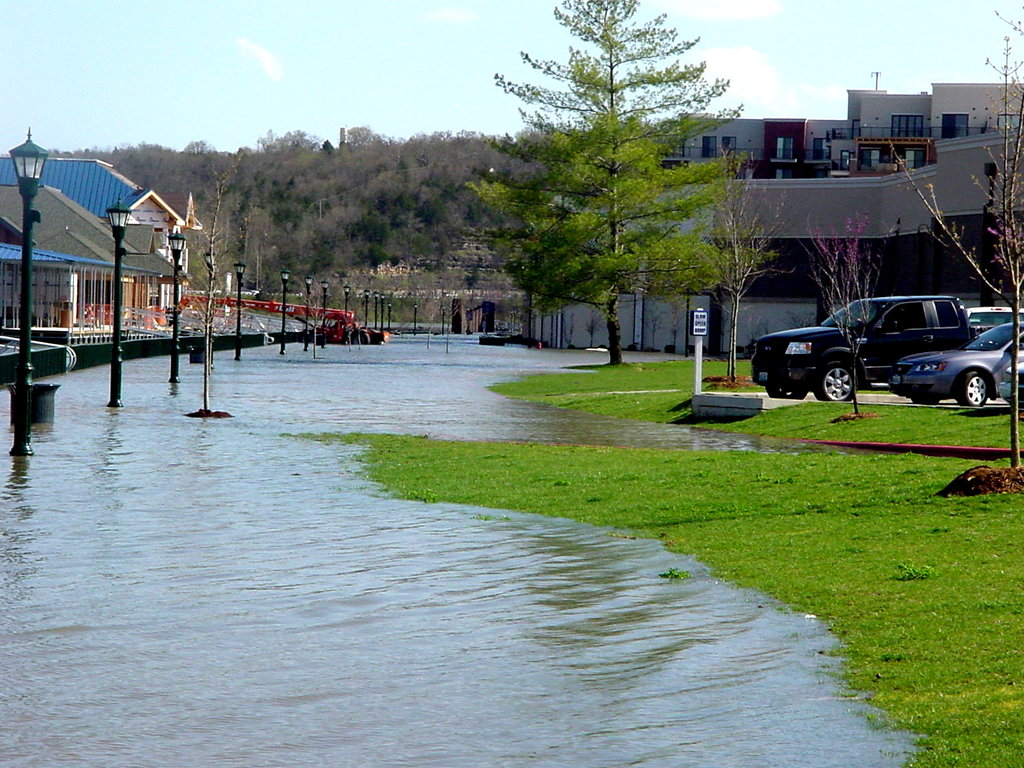
 Flood insurance confuses even the most seasoned insurance professionals. Flood is a damaging, yet predictable peril.
Floods move faster and strike with greater force now that so much land is paved or graded to drain quickly; local streams and drainage systems can swell almost immediately after intense storms.
The hundred-year floodplain mapping is often a decade or more behind development and changing drainage patterns, and storm retention in new projects may still release water at rates comparable to a ten-year storm.
These trends mean the flood peril will remain a significant risk for many properties, and measures that once seemed sufficient may no longer protect against modern storms; for information on how drainage and controls affect risk, see Flood Control and Flood Insurance.
Coverage limits
- Building property – $500,000
- Personal property – $500,000
Valuation for damage is generally based on actual cash value, which is replacement cost less depreciation, unless a different valuation method is specified on the policy.
Federal guidelines define flood as an overflow of inland or tidal waters, unusual or rapid accumulation of runoff, mudflow, or the collapse of shoreline or banks caused by flood or wave action.
FEMA defines mudflow as a river of flowing mud on the surface of normally dry land; it does not include landslides or slope failures that are not caused by flood-related erosion.
Flood insurance covers only the narrowly defined flood peril described above; for a plain-English overview of what flood insurance generally provides, see What is Flood Insurance?
Deductibles apply separately to building and personal (contents) coverage, and contents coverage is never bundled into building coverage — they can be on the same policy but are handled as separate limits, valuations, and deductible applications.
The Standard Flood Insurance Policy General Property Form is the form used for commercial properties and for residential buildings with more than four family units; commercial owners should review specialized considerations for business properties and continuity planning.
Building coverage includes permanently installed items such as HVAC systems, sump pumps, built-in cabinets, water heaters, awnings and canopies, and permanently attached antennas; business interruption and loss of income are not covered under the standard policy.
Personal property coverage excludes currency, precious metals, coins or stamp collections, stock certificates, vehicles, and damage from ensuing mold or mildew unless the insured mitigated the potential for loss as required by the policy.
Increased Cost of Compliance (ICC) is an optional add-on that helps pay to elevate, relocate, or otherwise comply with current community floodplain management requirements after a qualifying flood loss; ICC is limited to $30,000 and is included within the overall building claim limit.
Because coverages and exclusions differ for residences and commercial properties, consumers with personal risks should review policy details and options for home coverage; see Personal Lines Flood Insurance for more on homeowner and renter considerations.
If you want a quick way to get or compare coverage, you can ask your agent about flood insurance and available limits and endorsements.
Frequently Asked Questions
Do standard homeowners policies cover flood damage?
No. Standard homeowners policies normally exclude flood; you need a separate flood policy to cover the specific flood peril described by federal definitions.
What is covered under building versus personal property limits?
Building coverage applies to the structure and permanently attached items, while personal property (contents) coverage applies to movable belongings, each with its own deductible and limit.
Can I get more than $500,000 in coverage?
The National Flood Insurance Program’s standard limits are $500,000 for buildings and $500,000 for contents on commercial forms; excess flood insurance from private markets may be available for higher limits.