keyboard_backspaceBack to main blog page

Scurich Insurance Services - Blog

Scurich Insurance Services has been serving the Monterey Bay Area since 1924. Our mission is to partner with our customers and provide them superior service and value. We are a member of United Valley Insurance Services, Inc., a cluster of over 70 California Independent Insurance agencies, which produced over $530,000,000 of annual premium last year. At Scurich Insurance Services we understand your business and our community. Our customers look to us for comprehensive solutions. We have established relationships with more than 40 of the nation’s leading insurance providers, which allows us to deliver multiple, competitively-priced options and a team of experts to guide you through the process. When you need to file a claim, change a policy or process a certificate you can depend on Scurich Insurance Services to respond quickly to your request. SERVICES In order to provide value added benefits to our customers that go beyond the insurance policy Scurich Insurance Services offers the following additional services: Safety Programs – English and Spanish OSHA Compliance Safety Policies – English and Spanish Online OSHA 300 Log Safety Posters and Payroll Stuffers - English and Spanish Certificates of Insurance – If received before 3:30pm done the same day Risk Management Consulting Brokerage Services Represent most major insurance companies to better market your account. Safety tapes/DVD’s BUSINESS LINES Commercial Commercial Packages Business Auto Workers Compensation Umbrella Bonds Directors & Officers Professional Liability Employment Practices Liability Personal Auto Home Umbrella Recreational Vehicles Boatss Life & Health Individual Medical Individual Life Group Medical Group Benefits

Search Results

Posts in category Personal Insurance - Personal Insurance

Are You Ready For A Car Crash?

Author TonyScurich , 11/2/2016
  safe-1142432_1920You know the drill after an auto crash, heart stopping panic, and then, especially if there’s major damage or a serious injury, exchanging names, addresses and insurance information with the other driver. Easy, right? However, if the other driver refuses to provide these particulars (or you’re so shaken that you forget to ask for them), you could end up in serious financial, or even legal, trouble. Dan Young, Senior Vice President of Insurance Relations for CARSTAR warns, “[After an accident] sometimes drivers just don't do what they’re supposed to do." To make sure you’re prepared for such a mishap, follow these guidelines:
  • Remain at the scene. Although state laws differ, failure to exchange information or notify police can lead to a hit-and-run charge or loss of your license.
  • Keep a “cheat sheet” in your glove compartment about what to ask after an accident.
  • Use your cellphone to take a photo of the other vehicle, (preferably showing its license plate) as visual proof of the incident.
  • Write down details. As soon as you and your vehicle are out of traffic and harm's way, record the date and time, location, make and model of the cars and actions or statements by the other driver.
  • Ask any bystanders or eyewitnesses for their names and contact information.
In the meantime, review your auto policy to make sure that you carry: 1) collision coverage, which will pay for repairing your car and providing a replacement vehicle, if needed and 2) uninsured/underinsured motorists insurance (UM/UIM), which will cover damages for injuries caused by an uninsured or underinsured driver. For more information, feel free to get in touch with our agency  

Reporting Insurance Scams: It’s The Law!

Author TonyScurich , 10/5/2016
  As you go about your daily business, insurance fraud is probably one of the furthest things from your mind. However these all-too-common scams, everything from homeowners who report a non-existent burglary to collect on their policies to drivers who stage auto accidents and file injury claims – are criminal acts that you have a legal obligation to report. If you’re aware of, or suspect, a fraudulent act that involves insurance follow these steps:
    • Inform the insurance fraud bureau in your state either through its telephone “hot line” or online.
    • Contact the fraud department of the insurance company involved. Most companies have hotlines for this purpose. If a fraud hotline isn’t available, or if you’re uncomfortable using it, write the fraud department instead.
    • If the alleged fraud involves a medical issue – such as a claim for a non-existent condition – contact your state medical board or chiropractic board immediately in order to protect the complainant, as well as other possible victims.
    • If appropriate, notify other authorities, such as the police (if someone’s life might be in danger) or your local Social Security office (in case of suspected Social Security fraud).
    • Remember that, as a witness, you must report all the details involved: full names, dates, organization, company name, the amount of money involved, etc. Provide any documentation or other information you think might help with the investigation.
    • Be patient. Investigating complaints takes time; it might be months before the investigators have gathered enough evidence to bring the perpetrators into court.
A word to the wise. insurance scams costs billions of dollars a year, driving up premiums for everyone – including you.  

Floods, Cars, And Auto Insurance

Author TonyScurich , 9/30/2016
1

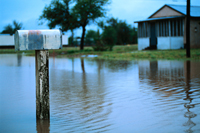
Floods happen - and nearly half of all deaths related to them involve vehicles, says the Federal Emergency Management Agency.

The best advice for drivers during periods of heavy rain or flooding is to stay off the road. If that's not possible and you see signs of high water or stranded vehicles, pull over or take a different route ("Turn around, don't drown").

However, an unexpected flash flood can easily catch you unawares. If this happens, safety experts recommend taking these precautions to prevent an accident or a water-damaged car:

  • Never drive beneath an underpass during a heavy rainstorm because they're prone to flooding.
  • Be wary of water levels. According to FEMA it takes only one foot of water to float a car, or even an SUV, sweeping it off a bridge or down a road.
  • If your vehicle gets caught in a flood and stalls, or you lose control, get out before the car is carried downstream.
  • If you can't escape and your vehicle is going under, don't panic. Once the car is submerged, open the doors, hold your breath, and climb out.

The good news: If your car is involved in a flood-related accident, Auto insurance can make sure that you don't get swept away financially. Comprehensive coverage will pay for any type of damage to your car up to its actual cash value caused by natural events, such as flooding. If you hydroplane during a storm and flip your car or hit another vehicle or tree, Collision insurance will pay to repair it or cover the actual cash value of the car.

To learn more, please feel free to get in touch with our agency.


Car Insurance Deal-Breakers: Non-Renewal And Cancellation

Author TonyScurich , 7/25/2016

aquaplaning-83008_1280If your Auto insurance company sees you as a deadbeat or high-risk or driver, it might cancel or non-renew your policy.

Because insurers take cancellation seriously they won't eliminate coverage for a traffic ticket or two. What's more, state regulators ban cancellations under most circumstances. However, a company can non-renew your insurance at the end of each policy period (six to 12 months) or cancel the policy during the first 30 to 60 days that it's in force. The main reason for midterm cancellation is nonpayment. State regulators set the requirements, such as a written notice of non-payment, together with a 10 to 30-day grace period to pay. Some states allow insurers to cancel coverage, usually for an activity - such as a DUI conviction that involves bodily injury or substantial damage - which indicates you're at high risk for an accident; or for misrepresenting your driving history (for example, not disclosing that your teenager was behind the wheel instead of you when an accident occurred). Some companies will backdate coverage to the cancellation date, while others will not cover you during the period when you haven't paid your premiums. If you can't bring your account up to date or the company cancels you for a reason other than non-payment, your policy probably won't be renewed - which means you'll have to look for insurance elsewhere, probably at a higher rate. Depending on the reason for cancellation, some companies might refuse to write your business. In this case, you can to turn to the state's assigned-risk pool, which offers bare bones coverage at higher rates. Your best move is to do everything possible to avoid cancellation or non-renewal. For example, if you can't afford to premium payments, consider reducing your coverage rather than take the risk or cancellation. For more information, just give us a call. We're here to help!  

Saying 'I DO' To Wedding Insurance

Author TonyScurich , 7/22/2016
3

As the average cost of getting hitched keeps rising (to $27,000 in 2012), more and more couples are using Wedding Insurance to protect their investment against mishap - and help ensure peace of mind on this special day.

Wedding policies will reimburse you for losses due to:
  • Weather: The cost of rescheduling if the event has to be postponed because of rain or other bad weather.
  • Illness or injury to the bridal party. The expenses of postponing the wedding if essential people (such as the maid of honor or best man) can't be there.
  • A missing celebrant. Some of the costs if your minister, justice of the peace, rabbi, or other celebrant doesn't show up.
  • Missing vendors. Some, or all, of the expense (including rescheduling) if the caterer, florist, photographer, or other key vendor is missing in action.
  • Damage to the venue. Your losses if fire, electrical or mechanical outage, or going out of business makes the wedding or reception site unusable, forcing you to reschedule. (This coverage might not apply if the sites already carry insurance).
You can also buy coverage "riders" for a variety of other risks, ranging from a military service call-up to the bride or groom and damage to a wedding gown or tuxedo, to stolen or damaged gifts, and cancellation of your honeymoon due to illness, bad weather, or other mishap. If you're holding the ceremony in your home, you might also want Liability insurance in case a guest gets hurt or injures someone. Premiums can range from $100 to $1,000 (if you buy Liability coverage and host an open bar). We'd be happy to tailor a Wedding policy to meet your needs, and budget. Just give us a call.

That's Hot! Home Insurance Technology Trends

Author TonyScurich , 7/20/2016
3

If you want to insure a mansion or a priceless art collection, don't be surprised if a certified thermographer shows up at your door, infrared camera in hand.

Thermal imaging cameras are among the latest high-tech tools Homeowners insurers are using to help stem losses before they become catastrophes, saving policyholders from heartbreak and companies millions in damage claims. One major insurance company is using thermal imaging cameras for its high-value homes, letting inspectors "see" hidden hot or cool spots. A hot reading might indicate a fire hazard from an electrical malfunction, while a cool reading could come from a leak. In one case, the camera detected a cool spot in a ceiling due to a leak caused by a faulty 37-cent clip in an upstairs ice maker. If the ceiling had collapsed, it would have caused $125,000 in damage. High-tech devices aren't limited to the high-end market. One insurer offers an online risk-assessment tool that its Homeowners clients can use to find the risks for flooding, wildfire and storm surge, based on their address. This company also provides its clients inexpensive alarms that can detect potential water leaks before they can cause extensive, and expensive, damage. Insurance companies are exploring new technologies. One insurer has patented a data recorder that can be installed in building to analyze potential causes of damage or destruction. Another company has filed a patent for a system that would use spectroscopy to identify chemical changes caused by wildfires and other natural disasters. If such a change were detected and confirmed, the company could speed up the claims process.

Home Repairs: 'Like It Never Even Happened'

Author TonyScurich , 6/1/2016
3

A pipe bursts and water ruins a corner of your Brazilian cherry wood floor. A windstorm tears off half of the vinyl shingles on one side of the house. A fire burns a couple of kitchen cupboards. Although your Homeowners policy will cover such partial losses, the extent to which the insurance company must go to make everything look just the way you'd like can be tricky.

Let's say that the new siding contrasts with the older, weathered shingles or that you can't find replacement kitchen cupboards that precisely match the originally. Your claim should put you back to pre-loss condition so the new part shouldn't stick out like a sore thumb. For example, this might mean replacing the entire floor of a room even if only a portion needs repair, or repainting all four walls after damage to only one. In some states, if replaced items don't match in quality, color or size, the insurance company must make "reasonable repairs or replacement of items in adjoining areas." Although other states don't have laws on matching, some Homeowners insurers have added similar "non-matching language" to their policies. Besides varying by state, insurer, and policy, the issue of patching versus full replacement can depends on insurance company adjusters. If you can't get make any headway with the adjuster on the repairs you want, consider going over his or her head to a supervisor, or file a complaint with the state insurance department. Another option is to hire a public insurance adjuster to work on your behalf through the claims process. These professionals usually charge about 10% of the final settlement.

Auto Insurance: Saving $$ In Your Golden Years

Author TonyScurich , 5/2/2016
1

Your Auto insurance rates are based on a variety of factors such as your driving record, mileage, the car you drive and your age.

Rates are highest for drivers in their teens and early 20, tend to fall for those aged 30 to 60-something, and then start climbing again around age 70. Although drivers in this age range tend to drive less and are more mature, their vision and reflexes are declining. They're also more likely to be injured in an accident than their younger counterparts, and to suffer more severely because they're physically weaker. Also. They often drive smaller cars, which are more vulnerable to damage. Here are five ways that senior drivers can keep their Auto insurance rates affordable. :
  1. Update your mileage. You can get a discount of 5% to 10% if you no longer commute or drive long distances.
  2. Use a telematics device. A usage-based or pay-as-you-go Auto insurance program can reduce premiums by 5% to as much as 40%.
  3. Take a class. Most states require Auto insurers to offer "mature drivers" (who can be as young as 55) a discount of 5% to 15% for completing an accident-prevention course.
  4. Exclude a driver. In some states, you might be able to drop coverage on a driver who no longer gets behind the wheel.
  5. Make your car safer. Some insurance companies offer discounts for anti-theft devices, airbags and anti-lock brakes.
Bear in mind that drivers can use some of these methods at any age and save on Auto insurance by raising their deductible or reducing coverage. To make sure you get the protection you need at a cost you can afford, just give us a call.

Beware Of Techno-Jackers

Author TonyScurich , 4/22/2016
3You pull into the grocery store parking lot to pick up a few snacks, and park. As you head for the door, you push a button on your keyless remote to lock it. You don't hear that faint chirp, but you're in a hurry. Fifteen minutes later, you discover that your car is gone. Welcome to the world of 21st-century auto theft!

On the surface, things appear to be improving. Vehicle thefts fell 3.3% nationwide in 2011 (the most recent data) for the eighth straight year. However, auto theft still costs the nation an estimated $5.8 billion a year, thanks to streetwise thugs who feed chop shops and supply lucrative international black markets. These days, car thieves are becoming smarter, more tech-savvy, and harder than ever to stop. 

Anyone can go to a home-improvement store and buy a $20 device that jams the remote keyless entry transmitter on a vehicle. If you aren't paying attention, you walk away from your vehicle, press the button on the remote, and assume that it locks. However, a thief might be two cars over in the parking lot, punching a button to block the signal. The vehicle doesn't lock, and the thief can take your laptop, portable GPS, or whatever else is inside. With enough time, he can even steal the vehicle! 

To guard against jammers, pay attention to your surroundings and make sure your car doors do indeed lock when you press the button. Listen for the click or chirp, or look for the quick flash of lights that confirmations locking on most cars. If the vehicle doesn't lock, try again. However, if locking doesn't work on the second attempt - or if you see someone lurking nearby - move your car to a different spot.

An ounce of prevention..

Home, Sweet (Temporary) Home

Author TonyScurich , 3/18/2016
1If a disaster covered under your Homeowners insurance wrecks your home, you don't have to couch-surf until repairs are finished.

The standard Homeowners policy will pay for loss of use or Additional Living Expenses (ALE) - such as rental and hotel costs - while your dwelling remains uninhabitable

Check out these guidelines for using this valuable coverage:

  1. Know the amount of your ALE. The Homeowners policy caps additional expenses as a portion of the Dwelling coverage (usually 20%) and sets a time limit, such as 12 months. If you believe that you'll need more coverage, increase the amount before disaster strikes.
  2. Look for comparable digs. Staying in a hotel gets old rapidly, so you'll want to get settled quickly. However, don't decide too soon - you're entitled to stay in a place that's comparable in size and quality to your house.
  3. Count all your extra expenses. In addition to the cost of housing, don't overlook other expenditures - everything from restaurant meals while living in a hotel and fees for boarding pets to the expense of coin-operated laundry and extra mileage for driving further to work.
  4. Remember that the key word for ALE is "additional." The insurance company can deduct any money you save from living in temporary housing (such as the amount you would have spent on groceries from your reimbursement for restaurant meals while you're staying at the hotel).
  5. Keep your receipts. The insurance company will generally reimburse you for expenses as they're incurred, rather than paying a lump sum. Keep meticulous records of every expenditure, save all your receipts - and store them in a waterproof, zippered pouch.

For more information on your Additional Living Expenses coverage, please feel free to get in touch with us at any time.


    • 1
    • 2